
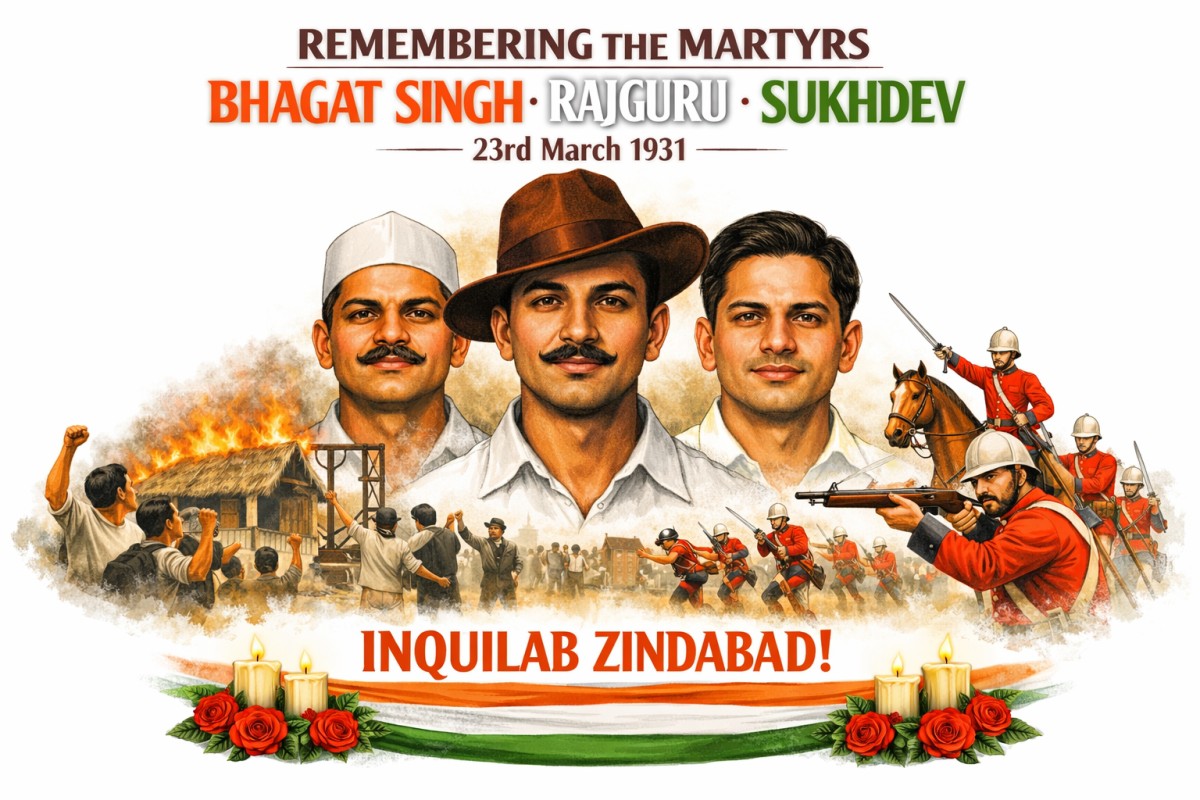
Every year, 23 March returns not merely as a date in history, but as a solemn reminder of the price at which freedom was imagined, defended, and ultimately inherited. It was on this day in 1931 that three young revolutionaries — Bhagat Singh, Shivaram Rajguru and Sukhdev Thapar — walked to the gallows with unmatched calm, leaving behind not grief, but a moral inheritance that continues to challenge every generation of India.
They were young in age, yet immense in conviction. Their struggle was not driven by anger alone, but by a profound political consciousness — a belief that freedom without justice would remain incomplete. Their sacrifice gave a voice to millions who had not yet found one.
Bhagat Singh’s words still resonate with extraordinary force:
“They may kill me, but they cannot kill my ideas. They can crush my body, but they will not be able to crush my spirit.”
Another timeless reminder from him remains equally relevant today:
“Bombs and pistols do not make a revolution. The sword of revolution is sharpened on the whetting stone of ideas.”
His call for intellectual courage remains perhaps his deepest message:
“Merciless criticism and independent thinking are the two necessary traits of revolutionary thinking.”
Rajguru symbolised fearless action, while Sukhdev represented disciplined commitment to organisation and ideological clarity. Together, they were not merely martyrs of an anti-colonial struggle — they became symbols of moral resistance against injustice in every age.
Their martyrdom demands remembrance not through ritual alone, but through honesty, courage and civic responsibility. True tribute lies in defending truth, questioning oppression, and preserving the democratic dignity for which they died.
On this Martyrs’ Day, the nation bows its head not in sorrow, but in gratitude. Their bodies perished, but their defiance remains immortal.
Inquilab Zindabad.
