
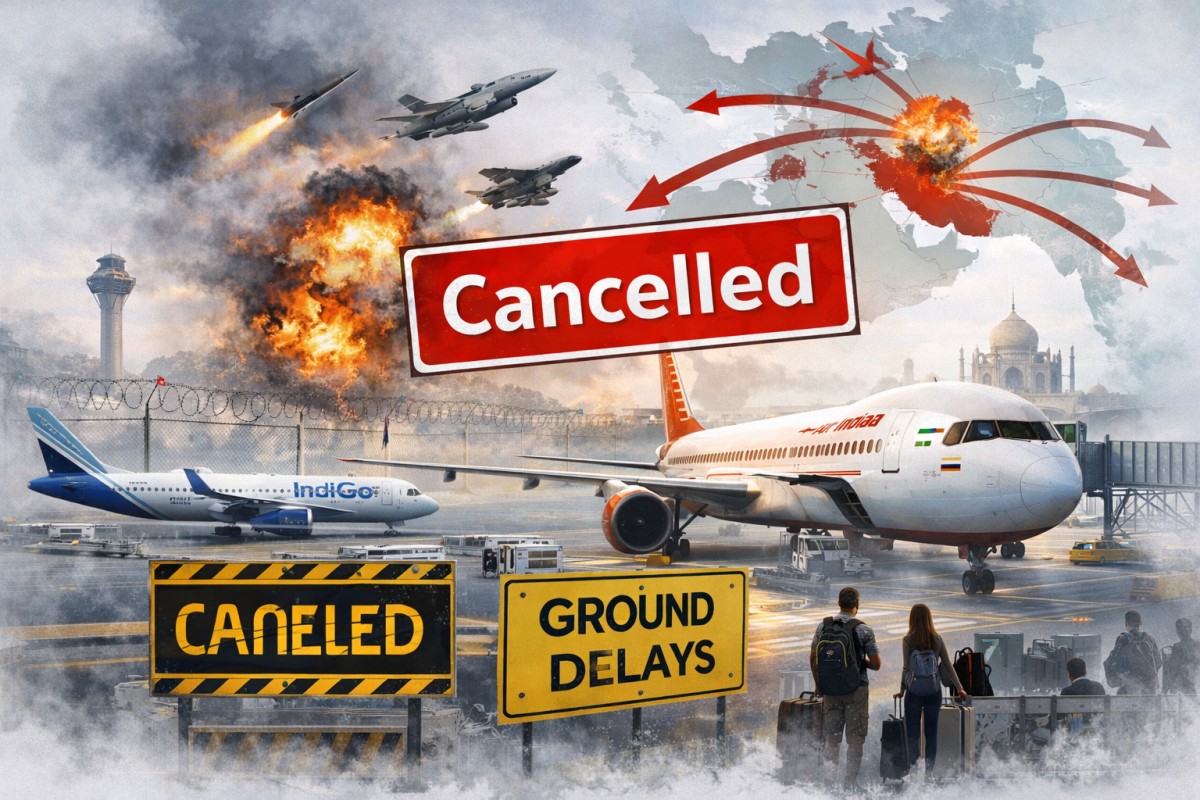
New Delhi, March 1: Air travel between India and the Middle East has been severely disrupted as escalating regional tensions forced the closure of key airspace corridors.
According to aviation officials, 410 flights were cancelled on February 28, followed by approximately 444 cancellations on March 1, as carriers adjusted operations to avoid conflict-affected airspaces across Iran and neighbouring countries. The Ministry of Civil Aviation has advised airlines to steer clear of multiple restricted zones until further notice.
Airline Impact
- Air India has suspended several long-haul international services, including Middle East routes, and cancelled about 50 overseas flights while monitoring the evolving situation.
- IndiGo, India’s largest domestic carrier, has grounded dozens of services, including regional flights, contributing to the overall cancellations.
- Other carriers such as Air India Express, SpiceJet, and Akasa Air have also reported significant disruptions, with dozens of flights cancelled collectively.
Passenger Disruption
The crisis has left thousands of travellers stranded at major hubs such as Delhi and Mumbai. At Mumbai airport alone, dozens of flights were cancelled or rescheduled, creating congestion as airlines managed diverted aircraft and passenger traffic. Carriers are offering refunds and free rescheduling options to affected passengers.
Broader Impact
Beyond direct Gulf routes, westbound flights to Europe and North America have also been rerouted to avoid restricted airspaces, leading to longer flight times and increased operational costs. Industry experts warn that the disruption could persist if regional hostilities intensify.
Government Response
The Ministry of Civil Aviation has convened meetings with airlines and regulators to coordinate safety protocols and manage passenger grievances. Dedicated control rooms have been set up to assist travellers, while authorities continue to monitor the reopening of regional corridors.
