
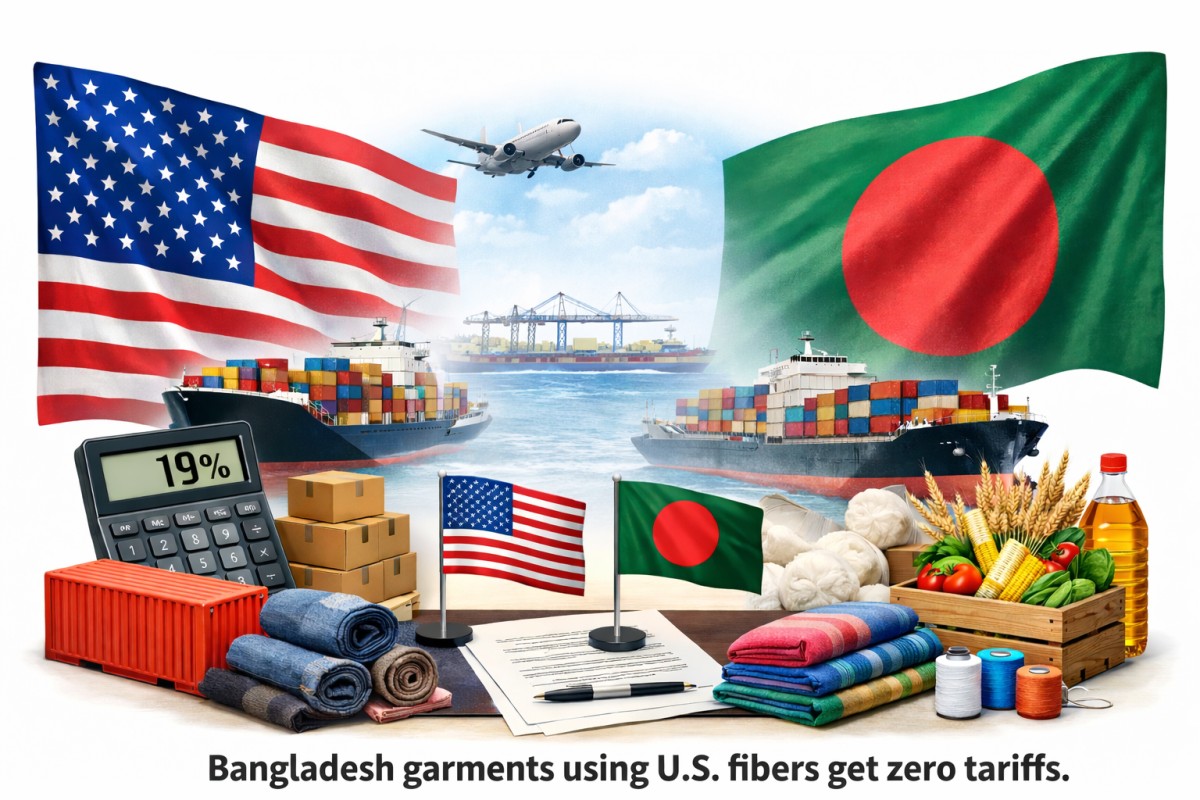
February 10, 2026, Dhaka : The United States and Bangladesh have officially signed a landmark bilateral trade agreement that lowers the reciprocal tariff on Bangladeshi imports to 19 percent. This development follows nearly nine months of intensive negotiations that began in early 2025. The new rate represents a decrease from the 20 percent tariff established last August and is a significant reduction from the 37 percent rate initially proposed by the American administration.
A key feature of the agreement is the establishment of a specialized mechanism for the textile and apparel industry. Under this provision, specific garments manufactured in Bangladesh that utilize raw materials sourced from the United States, such as cotton and man-made fibers, will be eligible for a zero-tariff rate. This move is expected to provide a major boost to the Bangladeshi ready-made garment sector, which currently accounts for more than 80 percent of the nation’s total export earnings and employs approximately four million people.
In exchange for the reduced tariff rates, Bangladesh has committed to providing expanded market access for a variety of American goods. These include agricultural products such as wheat, soybeans, and corn, as well as industrial items, medical devices, and machinery. The deal also includes significant commercial commitments from the Bangladeshi side, including the planned procurement of aircraft from Boeing and an estimated 15 billion dollars in energy product purchases over the next 15 years.
Beyond direct trade figures, the agreement addresses several non-tariff barriers and regulatory standards. Bangladesh has agreed to recognize American federal safety and emissions standards for motor vehicles and to accept certifications from the United States Food and Drug Administration for pharmaceuticals. The pact also outlines commitments toward strengthening labor rights, enhancing environmental protections, and improving intellectual property enforcement within the South Asian nation.
Officials from both countries described the signing as a new chapter in their economic partnership. By aligning more closely on trade policy and supply chain resilience, the agreement aims to foster a more balanced and stable commercial relationship. The deal will formally take effect once both governments complete their respective internal notification procedures and domestic formalities.
