
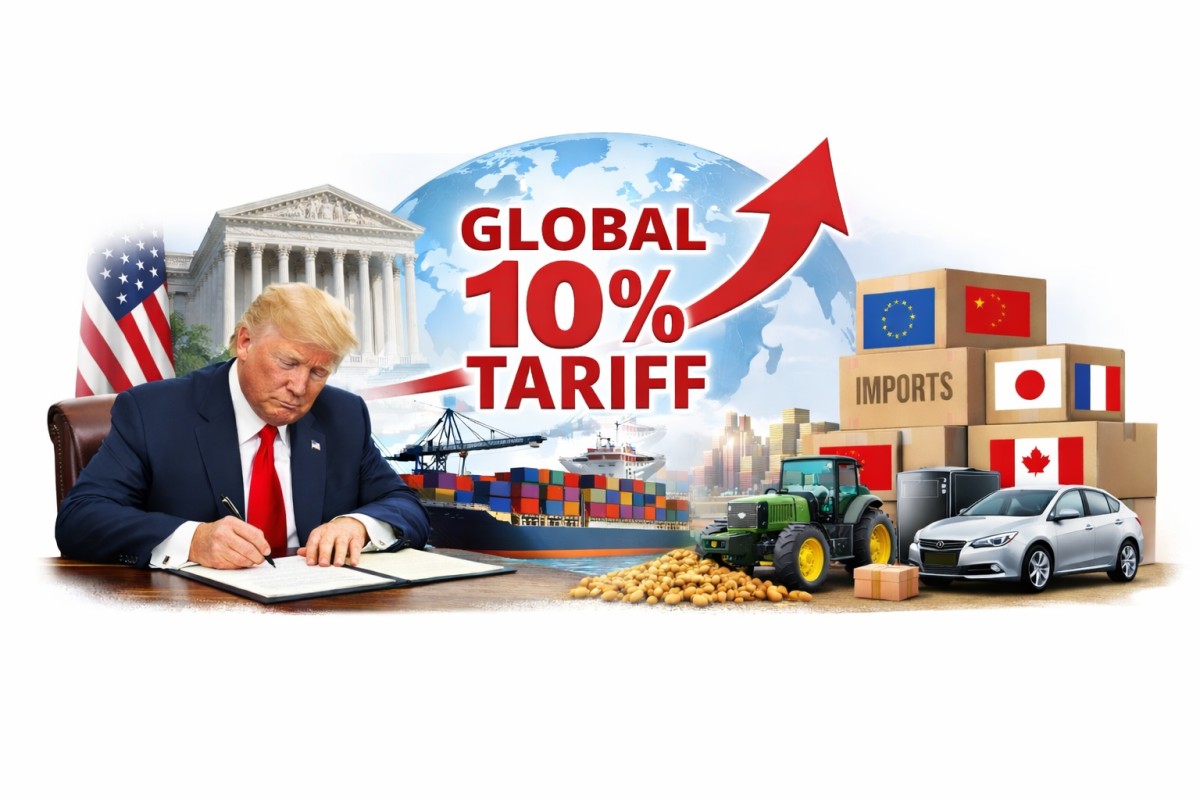
The above image is an illustrative representation, created with AI and does not depict actual individuals or events.
February 21, 2026, Washington, D.C. : In a swift move to preserve his signature trade policy, the President signed an executive order late Friday establishing a 10 percent global tariff on all imported goods. This administrative action comes just hours after a major judicial defeat at the Supreme Court, which had invalidated the previous tariff framework.
The new measures rely on Section 122 of the Trade Act of 1974, a legal provision designed to address serious balance-of-payments deficits. By pivoting to this authority, the administration aims to bypass the legal obstacles raised by the high court regarding the use of emergency economic powers for trade taxation. While the previous system faced criticism for its broad interpretation of executive reach, the new order provides a temporary bridge for the administration to continue its protectionist agenda.
During a late-evening press conference, the President expressed sharp disapproval of the judicial ruling, characterizing the decision as a hindrance to national economic interests. He emphasized that the new 10 percent levy will serve as a foundational rate while federal agencies conduct further investigations into global trade practices. These investigations are expected to pave the way for more permanent and potentially higher duties in the coming months.
Market analysts and international trade partners are closely monitoring the developments, as the order is set to take effect on February 24. While certain exemptions for critical goods like pharmaceuticals and specific agricultural products have been maintained, the broad application of the duty signals a period of renewed friction in global commerce. Treasury officials suggested that the move is intended to keep federal revenue projections stable despite the recent court-ordered cessation of previous duties.
Legal experts note that while Section 122 grants the executive branch the ability to impose temporary surcharges, it limits such actions to a 150-day window unless further legislative approval is secured. This creates a tight timeline for the administration to formalize its long-term trade strategy while navigating the complex aftermath of the Supreme Court’s intervention.
