
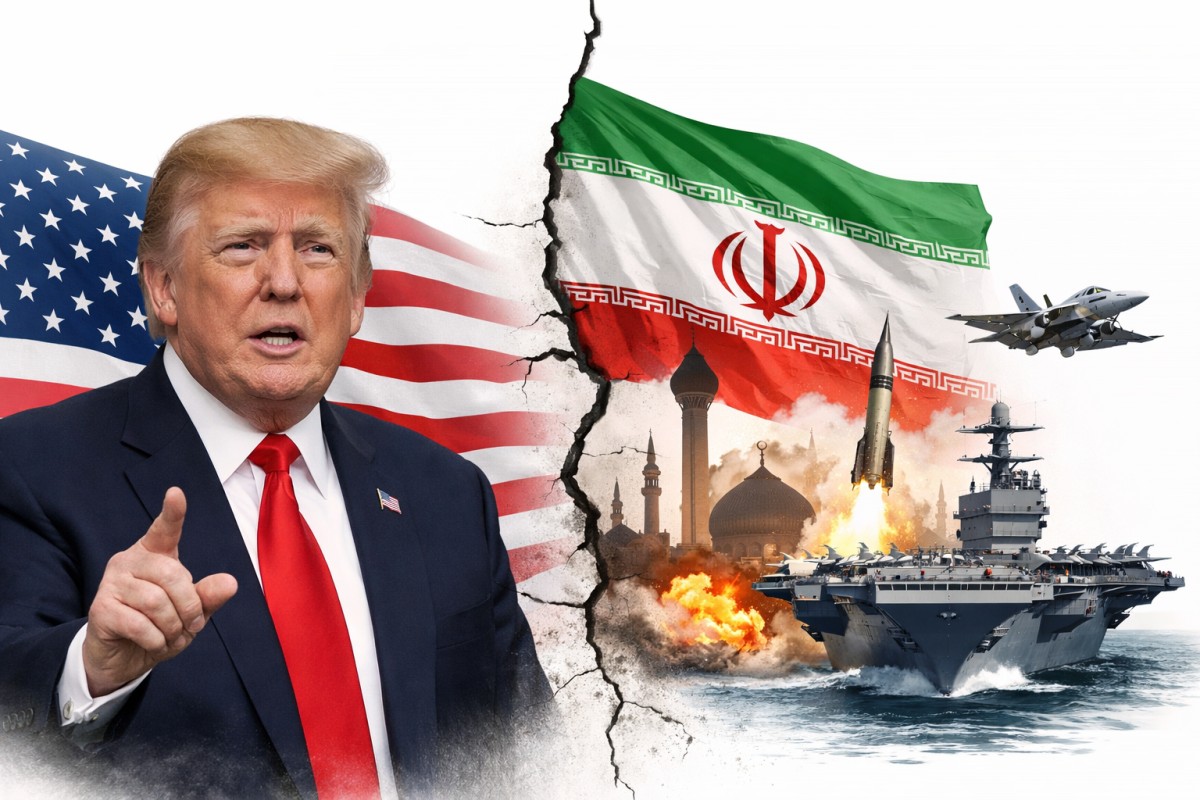
The above image is an illustrative representation, created with AI and does not depict actual individuals or events.
Washington, February 14, 2026 —US President Donald Trump has reignited international debate after suggesting that political change in Iran could be a desirable outcome if tensions between Tehran and the West continue to escalate. His remarks, delivered during a campaign-style address and later repeated in media interactions, have drawn swift reactions from diplomats, analysts, and political leaders across multiple regions.
Trump argued that long-term stability in the Middle East would be difficult without a fundamental shift in Iran’s governing structure. He described Tehran’s leadership as a persistent source of regional instability and claimed that stronger external pressure combined with internal public dissatisfaction could eventually lead to systemic change. While he did not outline a formal policy blueprint, he indicated that economic and strategic leverage should be intensified. He also confirmed the deployment of a second US aircraft carrier, the USS Gerald R. Ford, to the Middle East as part of heightened security measures.
Iranian leaders responded sharply, calling the comments interference in sovereign affairs and warning that such rhetoric could further damage already fragile diplomatic channels. Officials stressed that external calls for regime change historically increase mistrust and harden negotiating positions rather than produce reform.
Political observers note that “regime change” has long been a sensitive phrase in global diplomacy, particularly in Middle East policy. Past interventions and pressure campaigns have produced mixed outcomes, making governments cautious about endorsing similar language. Several foreign policy experts said the wording itself can raise tensions even in the absence of immediate action.
Within the United States, reactions have been divided. Supporters framed Trump’s position as a blunt acknowledgment of geopolitical reality, arguing that Iran’s internal political model is unlikely to moderate without major structural change. Critics countered that such statements complicate diplomatic efforts, strengthen hardliners, and reduce space for negotiation on security and nuclear matters.
Security analysts say the immediate practical impact of the remarks is limited, since Trump’s comments do not represent a formal policy shift. However, they note that high-profile political voices can still influence public debate and future direction. The statement arrives at a time when regional security concerns, sanctions policy, and nuclear oversight remain unresolved and politically charged.
Diplomatic circles are now watching whether Trump’s remarks shift campaign discourse in the United States or prompt firmer messaging from other major powers seeking to prevent further escalation in the region.
