
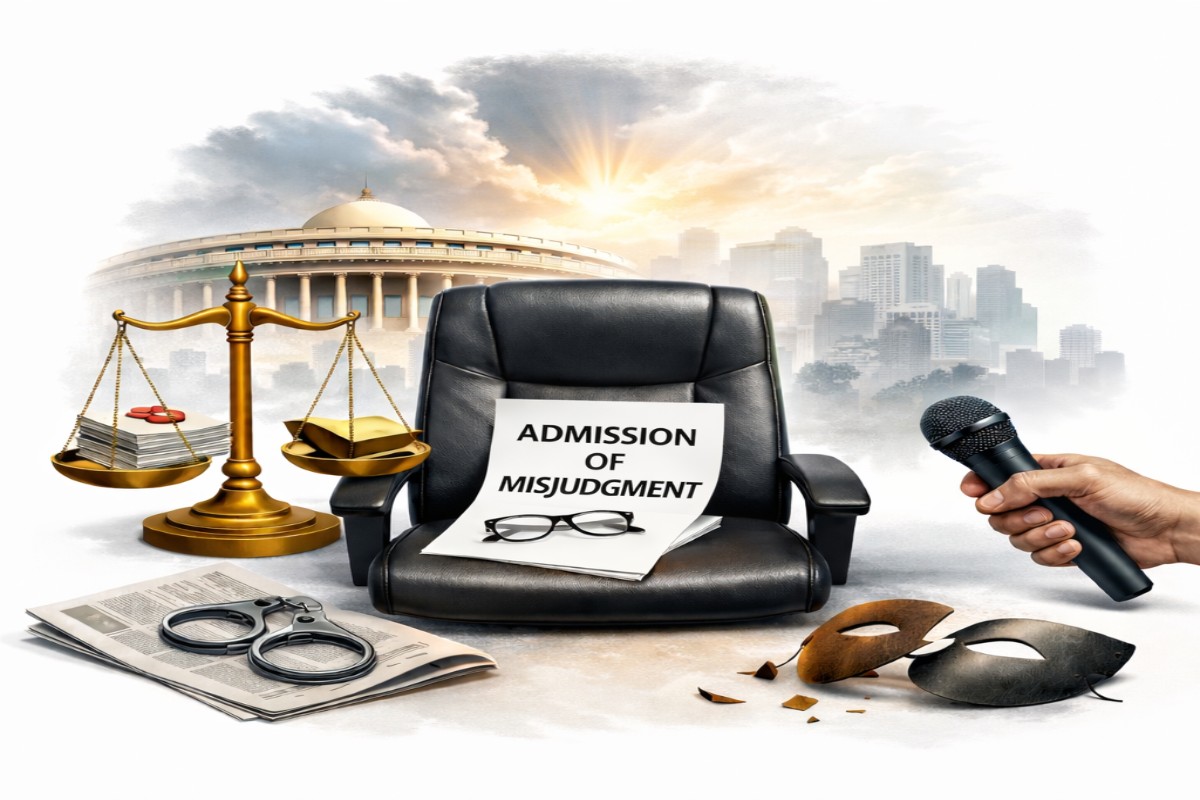
“A man who has committed a mistake and doesn’t correct it, is committing another mistake.” — Confucius
There are moments in history when silence becomes heavier than guilt. When the corridors of power grow quieter not because there is nothing to say, but because too much remains unsaid. The continuing global disclosures around the network of Jeffrey Epstein have created precisely such a moment.
Across continents, names of influence have surfaced in public reporting. Let us be clear, and legally fair: the appearance of any individual’s name in documents or media coverage related to Epstein does not automatically imply wrongdoing. Due process is sacred. Reputation cannot be tried in the absence of evidence. That principle must stand firm.
And yet, there exists another court — quieter, sterner, and far more enduring — the court of public conscience.
Recently, Bill Gates publicly acknowledged that his association with Epstein was a “huge mistake.” He did not frame it as a crime. He did not admit to illegality. But he admitted to misjudgment — to allowing proximity that cast a shadow over his philanthropic mission. That act of contrition did not diminish him; it humanised him. It did not destroy his foundation; it shielded its moral purpose.
The question before India’s political and corporate elite is simple and piercing: if a global titan can bow his head before public morality, why does our establishment remain locked in defensive stillness?
The Shadow and the Republic
Media discussions over time have referenced the names of several prominent global and Indian figures in connection with Epstein-related reporting. Internationally, personalities such as Bill Clinton, Prince Andrew, and Donald Trump have been mentioned in various public documents and news accounts — each case carrying its own context and legal standing.
In India too, public discourse has seen media references to individuals of high stature, including industrialist Anil Ambani and Union Minister Hardeep Singh Puri, among others, in international reporting. It bears repeating: mention is not conviction. Rumour is not proof. Association is not evidence of crime.
But leadership is not measured merely by what is legally provable. It is measured by what is morally defensible.
India is not a transactional society alone; it is civilizational. We speak of Rashtra-Dharma. We invoke sacrifice. We teach our children that character outweighs position. And yet, when difficult questions arise around those who occupy the highest offices or command the largest corporations, the instinct is too often denial, deflection, or dismissal.
Calling uncomfortable disclosures “trash” may protect a press conference. It does not protect public faith.
The Myth of the Irreplaceable
There is a deeply ingrained fear in our system — that if a powerful individual steps aside, the institution will collapse. That if a senior minister resigns pending scrutiny, governance will weaken. That if a business magnate temporarily withdraws from leadership, markets will tremble.
This is the “Big Man” illusion.
Institutions are not as fragile as we pretend. Political parties survive leadership changes. Corporations outlast their founders. Democracies mature when individuals place the system above themselves.
When Bill Gates apologised, the Gates Foundation did not crumble. On the contrary, it safeguarded its mission by acknowledging imperfection. The admission of a lapse in judgment was not a surrender to accusation; it was a defence of institutional integrity.
If even a handful of Indian politicians or business leaders — where warranted by circumstance — were to say: “Yes, I exercised poor judgment in maintaining certain associations. I regret it. I step aside so that the institution I serve remains unblemished,” it would not weaken India. It would elevate her.
From Denial to Dignity
The Indian public is not naïve. Nor is it bloodthirsty. Citizens do not demand flawless leaders; they demand honest ones.
An apology is not a confession, and stepping aside is not guilt — both are acts of accountability
Imagine the power of a leader saying:
“I may not have committed a crime. But I recognise that my judgment, in retrospect, did not meet the ethical expectations of the office I hold. I apologise to the nation. I leave it to the people and due process to decide the path forward.”
That single statement would resonate more deeply than a thousand legal rebuttals.
A Moment of Moral Reckoning
India stands today at a moral crossroads. We aspire to global leadership and economic power, but moral authority cannot coexist with ethical hesitation.
Institutions do not weaken when individuals accept responsibility; they weaken when individuals place self-preservation above public trust. If protecting the dignity of Parliament, a ministry, or a corporate institution requires personal sacrifice, that sacrifice becomes an act of national service.
Legal innocence may protect a position, but moral courage protects a nation.
An apology, where warranted, is not surrender — it is strength.
History does not remember those who clung to their chairs in moments of doubt. It remembers those who stepped aside to preserve something greater than themselves.
If even a few among India’s most powerful choose conscience over comfort, transparency over technicality, and accountability over arrogance, it will not merely resolve a controversy — it will redefine leadership for a generation.
For in the final reckoning, the Republic is always greater than the individual — and the courage to admit a mistake is the first act of true national service.
