
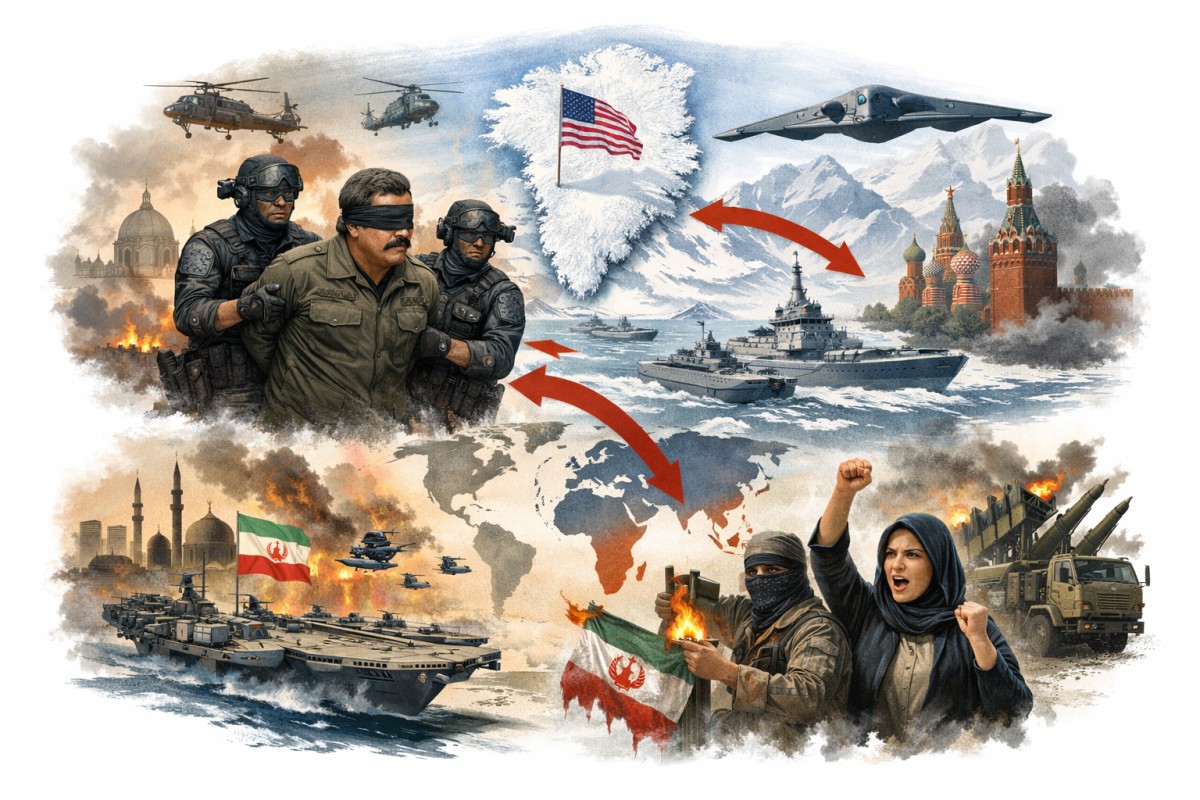
From the Abduction of Maduro to the Pursuit of Greenland
In the high-stakes theater of global power, silence is rarely just the absence of noise; often, it is a deliberate and chilling performance. As 2026 begins with a series of bold American military maneuvers, the most unsettling development isn’t the action in Washington, but the profound and uncharacteristic stillness radiating from the Kremlin. This departure from typical vocal opposition to American foreign policy comes in the wake of a significant operation in Venezuela earlier this month where U.S. forces executed a pre-dawn strike in Caracas resulting in the abduction of President Nicolas Maduro.
The operation successfully bypassed Russian-made S-300 air-defense systems protecting the capital. Despite the loss of a key ally nominally shielded by Russian technology and Cuban personnel, Moscow has offered little more than standard diplomatic condemnation. Geopolitical analysts suggest this silence highlights current limitations of Russian influence; as the invasion of Ukraine continues, the Kremlin’s capacity for broader global intervention has been significantly sapped.
This restraint may also reflect a strategic calculation. President Trump has signaled that the United States is no longer “obliged to think purely of peace,” shifting toward a more aggressive pursuit of national security interests. This new era of American expansionism has now turned its sights toward Greenland and Iran, testing the resolve of global adversaries and traditional allies alike.
Strategic Aspirations in Greenland
Following the Venezuela operation, the U.S. administration has intensified pressure on Greenland, a self-governing territory within the Kingdom of Denmark. President Trump has declared that “anything less” than full U.S. control of the island is “unacceptable,” framing the pursuit as vital to countering Russian and Chinese encroachment in the Arctic. To exert pressure, the administration announced a 10% tariff on Denmark and several European partners starting February 1, which is set to rise to 25% by June unless a deal for the “Complete and Total purchase” of Greenland is reached.
While the Danish and Greenlandic governments have firmly rejected these advances, U.S. officials have explored extreme measures, including potential payments of $10,000 to $100,000 to each of Greenland’s 56,000 residents to influence a local referendum. Despite a brief reversal of military threats at the Davos conference, the administration continues to view Greenland’s rare earth minerals and its position in the Greenland-Iceland-UK (GIUK) gap as essential for national protection.
Escalating Tensions with Iran
Simultaneously, the United States is seeking to force Iran into strategic submission. Amidst a violent crackdown on domestic protests in Tehran, the U.S. Navy’s USS Abraham Lincoln carrier strike group has been deployed to the Middle East. This “armada” is intended as a tool of coercive diplomacy, pressuring the Iranian government to halt executions and curtail its uranium enrichment program.
The threat of force remains active, with the administration warning that “help is on the way” for Iranian protesters. Recent U.S. military maneuvers have included the arrival of F-15E Strike Eagles and the evacuation of non-essential personnel from Al Udeid Air Base in Qatar, signaling preparations for potential strikes if Tehran ignores diplomatic warnings.
The underlying silence from the Kremlin amidst these cascading crises suggests a larger diplomatic realignment is underway. As Washington aggressively reshapes the world order, Moscow’s inaction indicates it may be prioritizing the war in Ukraine over its long-standing commitments to secondary allies in the Global South.
