
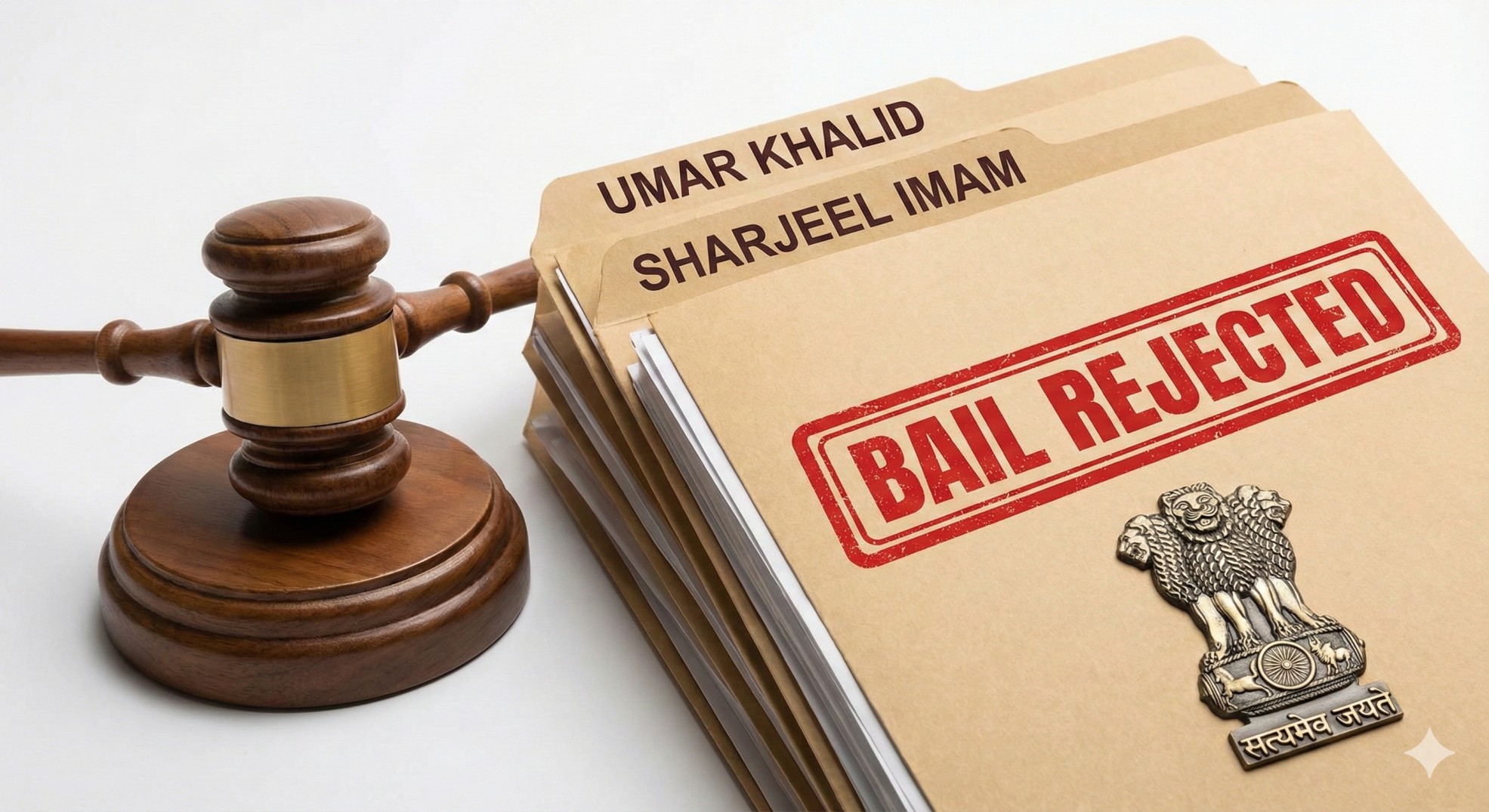
The Supreme Court on Tuesday turned down the bail applications of two prominent activists, Umar Khalid and Sharjeel Imam, maintaining their custody as investigations into alleged anti‑national activities continue.
Background of the cases
Umar Khalid, a former student leader, and Sharjeel Imam, a former political aide, have been under scrutiny for their alleged involvement in activities that the authorities claim threaten the sovereignty of the nation. Both were arrested in 2022 and charged under the Unlawful Activities (Prevention) Act (UAPA), a stringent anti‑terror law that mandates a high burden of proof for bail. Their arrests sparked widespread debate about the balance between national security and civil liberties.
Since their detention, numerous civil society groups and legal experts have petitioned the apex court, arguing that the evidence presented by the prosecution is insufficient to justify continued imprisonment without trial. The bail pleas highlighted procedural lapses, the right to a fair trial, and the impact of prolonged detention on the activists’ personal lives.
Court’s reasoning and order
In a concise judgment, the Supreme Court observed that the prosecution had presented credible material suggesting a continued risk of the accused influencing ongoing investigations or mobilising further activities deemed hostile to the state. The bench emphasized that the UAPA’s stringent bail criteria are designed to prevent potential threats, and the evidence met the threshold required for denial.
The judges also noted that the lower courts had already examined the factual matrix in detail, and the Supreme Court found no compelling reason to overturn those findings. Consequently, the bail applications of Umar Khalid and Sharjeel Imam were dismissed, and the activists remain in custody pending trial.
Reactions and implications
The decision elicited mixed responses across the political spectrum. Human rights organizations condemned the verdict, labeling it a setback for democratic freedoms and urging the government to ensure transparent judicial processes. Conversely, several political figures praised the ruling as a necessary step to safeguard national integrity.
Legal analysts predict that the denial of bail will prolong the high‑profile cases, potentially setting a precedent for future applications under the UAPA. The outcome also raises questions about the balance between state security measures and the protection of individual rights, a debate that is likely to intensify as the trials progress.
As the legal battle continues, the fate of Umar Khalid and Sharjeel Imam remains a focal point in the broader discourse on civil liberties, state security, and the role of the judiciary in India’s democratic framework.
