
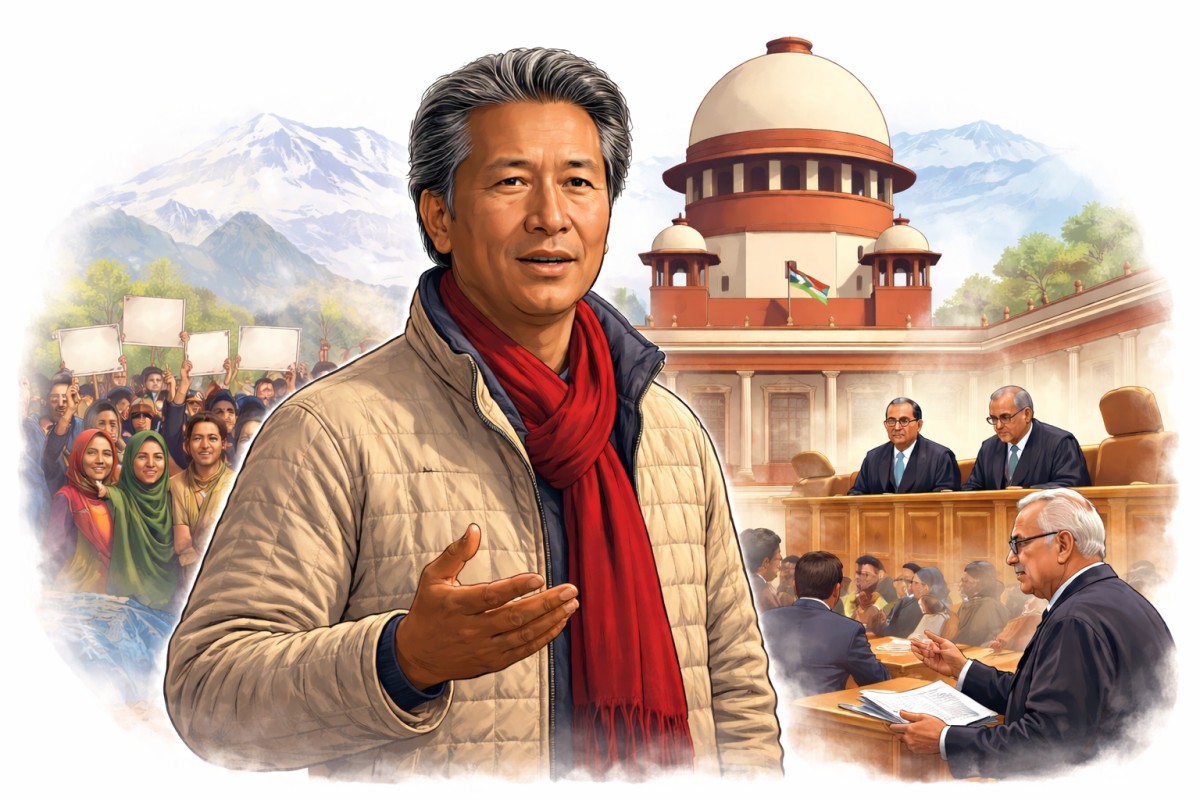
The Supreme Court of India is hearing a habeas corpus petition challenging the preventive detention of Ladakh-based climate and social activist Sonam Wangchuk, raising significant questions about procedural safeguards under India’s preventive-detention laws.
Wangchuk has been detained under the National Security Act in connection with protests linked to environmental and political demands in Ladakh. The petition, filed by his wife, contests the legality of the detention and alleges violations of constitutional requirements governing preventive custody.
During the hearing, senior advocate Kapil Sibal, appearing for Wangchuk, argued that authorities relied on multiple video recordings to justify the detention but failed to supply the actual video files to the detenue. He submitted that this omission impaired Wangchuk’s ability to make an effective representation against his detention, a right guaranteed under Article 22 of the Constitution.
Sibal told the court that at least one of the videos — a public speech delivered during protests — showed Wangchuk appealing for calm and explicitly distancing himself from violence. The defence argued that the non-disclosure of such material distorted the context of his conduct and amounted to a serious procedural lapse.
The matter was heard by a division bench comprising Justice Aravind Kumar and Justice Prasanna B. Varale, which questioned both sides on whether all material relied upon by the detaining authority had been duly furnished. The judges underscored that transparency in evidence disclosure is central to preventive-detention jurisprudence and cautioned that any failure in this regard could undermine constitutional protections.
The prosecution maintained that due process had been followed and argued that the content of the videos did not materially affect the grounds for invoking the NSA. The bench indicated, however, that the relevance of the videos and the manner of their disclosure would require close judicial scrutiny.
The case continues to draw attention from legal observers and civil-society groups, who view it as an important test of procedural fairness in preventive-detention cases. Further hearings are expected before the court delivers its decision, which could have wider implications for evidence-disclosure standards and the balance between national security and individual liberties in India.
