
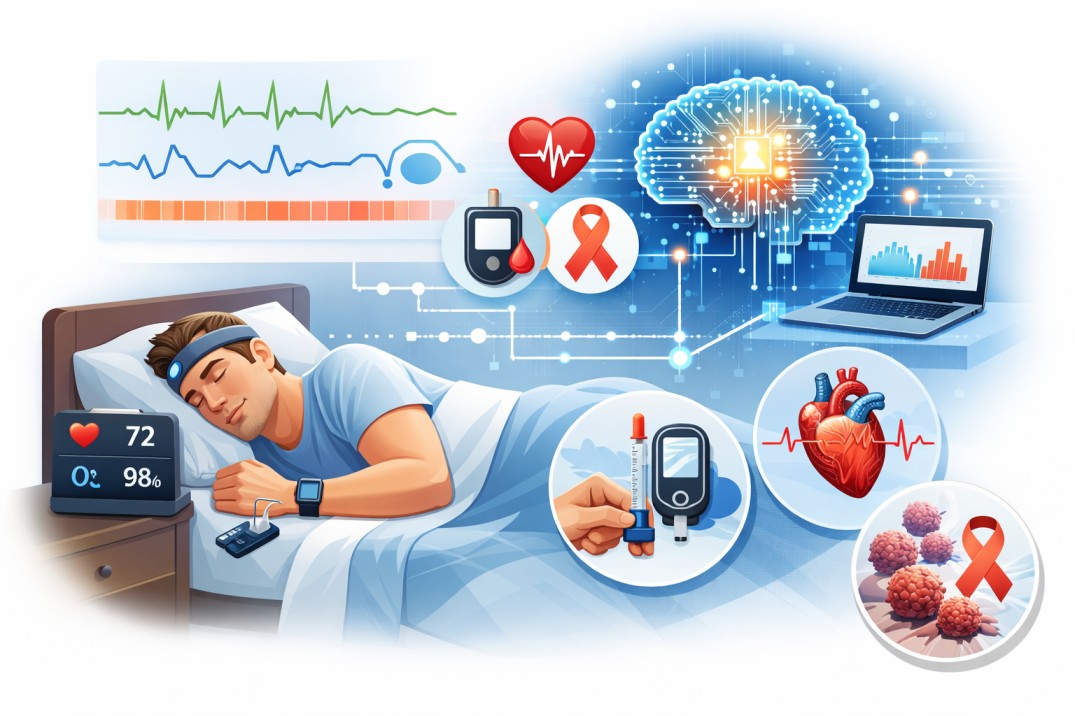
Researchers at Stanford Medicine have unveiled an advanced artificial intelligence system capable of estimating a person’s risk for multiple serious illnesses simply by analyzing data collected while they sleep. The model examines overnight physiological signals to flag early warning signs linked to conditions such as heart disease, diabetes and some cancers, potentially allowing both individuals and doctors to act well before symptoms emerge.
The technology relies on deep-learning algorithms that study information captured by wearable devices and bedside monitors, including heart rate, breathing patterns, body movement and blood-oxygen levels. Rather than depending on occasional medical check-ups or lab tests, the system evaluates these signals continuously, tracking subtle shifts from a person’s normal baseline that may indicate developing health problems.
To build the model, Stanford researchers trained it on more than 100,000 sleep studies, connecting nightly biometric patterns with later diagnoses documented in electronic health records. Through this process, the AI learned to associate early physiological changes—such as abnormal heart-rate variability or unusual respiration rhythms—with heightened disease risk.
According to the research team, the system generates daily risk assessments that can help users make informed choices, from adjusting lifestyle habits to seeking timely medical advice or follow-up testing. For clinicians, the data can be integrated into routine care, supporting earlier and more targeted interventions. Initial evaluations suggest the model’s ability to predict cardiovascular events is on par with widely used clinical risk calculators, while also offering insights into metabolic disorders and certain cancers that are typically harder to anticipate.
The approach offers several advantages, including non-invasive monitoring through commonly used devices and the ability to capture health changes that single, static tests may miss. However, researchers acknowledge limitations: prediction accuracy depends heavily on the quality and consistency of sensor data, and the handling of sensitive health information demands strong privacy protections and clear patient consent.
Stanford officials stress that the AI is designed to supplement, not replace, professional medical judgment. Its outputs are intended as screening signals that encourage further clinical evaluation rather than definitive diagnoses.
Looking ahead, the team plans to broaden the range of diseases the model can assess and to validate its performance across more diverse populations. Work is also underway with device manufacturers to integrate the technology into consumer wearables, which could eventually make sleep-based health risk monitoring accessible to millions. Further research will examine whether combining sleep data with genetic and lifestyle information can sharpen predictions, moving closer to highly personalized preventive care.
