
TTC – SPECIAL
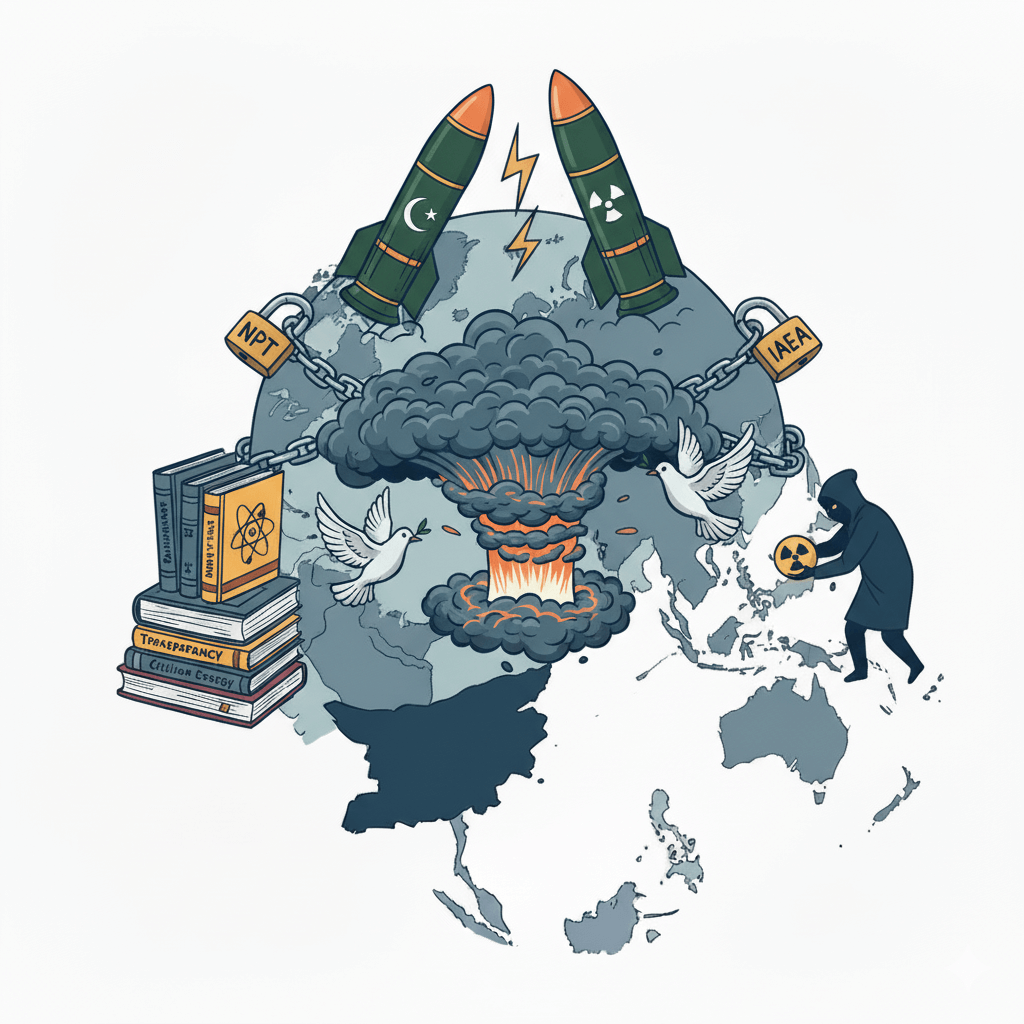
U.S. President Donald Trump’s claim that Pakistan may be conducting secret nuclear tests has reignited South Asia’s most enduring security concern. Islamabad’s swift denial has done little to ease global unease, especially in India, where such revelations echo decades of suspicion about Pakistan’s opaque and unpredictable nuclear behaviour.
For New Delhi, Trump’s statement isn’t shocking — it’s validation. Pakistan’s nuclear history is marred by concealment and proliferation, from A.Q. Khan’s illicit technology network that armed North Korea and Iran to recurring intelligence hints of covert enrichment. Each revelation only reinforces a truth India has long understood: Pakistan’s nuclear program thrives in secrecy and denial.
The gravity of Trump’s words extends beyond regional politics. They signal that Washington — still a strategic partner of Islamabad since the Cold War — is growing wary of Pakistan’s double game: cooperating on counterterrorism while quietly expanding its nuclear arsenal. How the U.S. responds now will reveal whether this rising skepticism becomes formal policy.
For India, the stakes are high. A neighbour with political instability, rising extremism, and unverified nuclear activity poses not just a strategic, but an existential challenge. Pakistan’s habitual nuclear brinkmanship — using its arsenal as a shield for proxy aggression — has undermined every attempt at lasting peace.
India, in contrast, has demonstrated restraint and transparency. Since 1998, it has maintained a no-first-use doctrine, opened its civilian facilities to inspection, and aligned with international non-proliferation frameworks. Its deterrence rests on credibility, not chaos.
If the allegations against Pakistan prove true, they threaten to reignite a dangerous regional arms race. The global community must demand transparency and verification — not polite denials. Nuclear stability in South Asia depends on responsibility, not secrecy.
India, for now, watches — not with fear, but with the steady awareness of a nation that has learned to survive in the shadow of a reckless neighbour. Because for India, nuclear peace is not about silence — it is about responsibility.
What makes Pakistan’s alleged nuclear activity even more alarming is the shifting security equation in the region. With Afghanistan unstable, China expanding its strategic footprint, and global attention divided, Pakistan’s military establishment once again finds room to test limits — politically and technologically. Any secret testing, if true, does not merely violate international norms; it risks plunging South Asia back into a cycle of mistrust and arms escalation that the region can ill afford.
President Trump’s statement, viewed from India’s lens, serves both as a warning and an opportunity. It underscores the urgency for international institutions to revisit Pakistan’s nuclear accountability — to demand transparency, verification, and adherence to global safeguards. It also reinforces India’s long-standing argument that nuclear responsibility cannot exist without political maturity.
Yet, the global community must remember that nuclear instability in Pakistan is not just an Indian concern — it is a collective danger. A state that has struggled with internal radicalisation, political fragility, and military dominance cannot be allowed unchecked control over weapons of mass destruction. The line between deterrence and disaster is thin, and history has already shown how dangerously Pakistan walks that line.
India, for its part, must continue doing what it does best — exercising vigilance with restraint. Strengthening intelligence networks, modernising deterrence systems, and deepening strategic ties with allies like Japan, the U.S., and France will ensure that India’s response is grounded in readiness, not rhetoric.
In the end, Trump’s comment has not revealed a new secret; it has merely pulled back the curtain on an old one the world chose to ignore. Pakistan’s nuclear opacity, long tolerated for geopolitical convenience, now stands exposed again. The question is whether the international community will finally act — or once more look away until it is too late.
India, for now, watches — not with fear, but with the steady awareness of a nation that has learned to survive in the shadow of a reckless neighbour. Because for India, nuclear peace is not about silence — it is about responsibility.
