
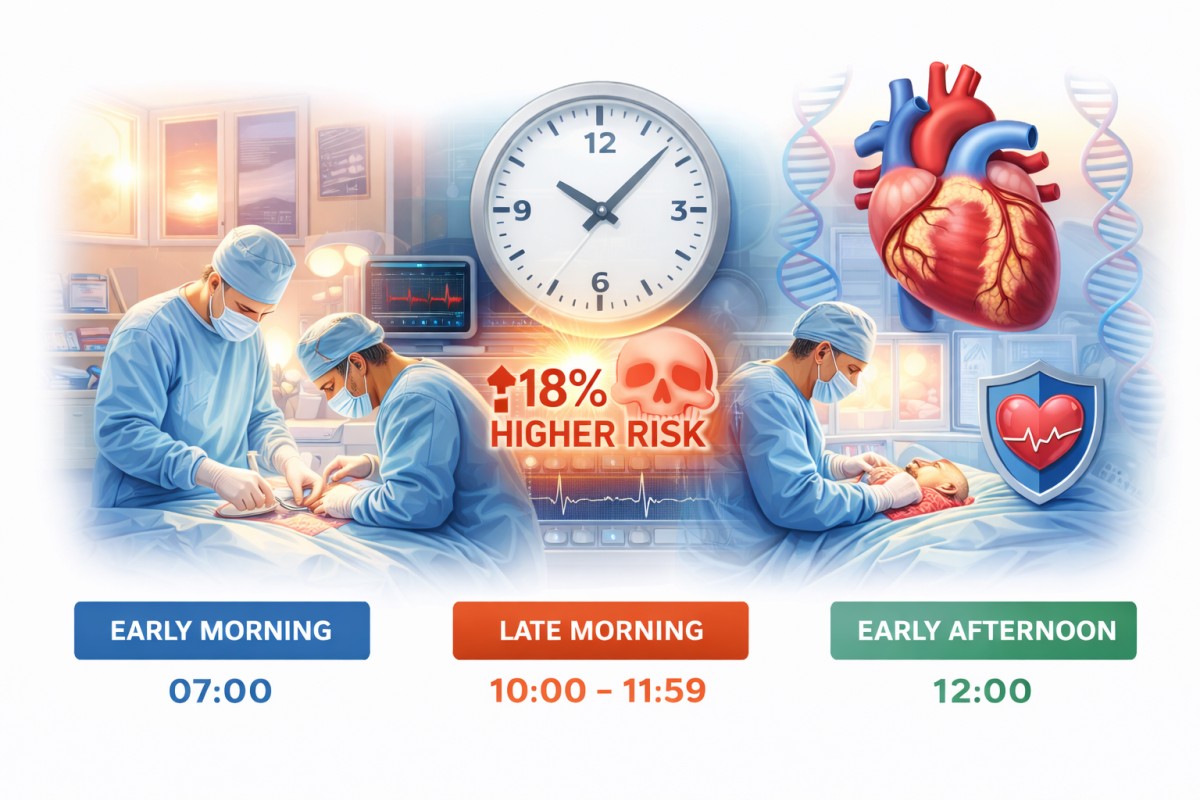
New research led by The University of Manchester suggests that the timing of a heart operation may influence patient survival. According to the study, cardiac surgeries starting in the late morning are associated with a slight but statistically significant increase in cardiovascular mortality compared to those performed at other times of the day.
The findings, published recently in the journal Anaesthesia, analyzed data from over 24,000 patients across England, Wales, and Northern Ireland. Even after adjusting for factors like age, diabetes, and the complexity of the procedure, the trend remained: patients whose surgeries began between 10:00 and 11:59 faced an 18% higher risk of heart-related death.
The Influence of the “Body Clock”
The study points toward the circadian rhythm—the internal 24 hour cycle that regulates our biological processes—as a potential factor. Every cell in the human heart and surrounding organs follows this clock, which affects how our bodies respond to the physical stress of major surgery.
Researchers categorized surgical start times into four distinct windows:
- Early Morning: 07:00 – 09:59 (The most common time, accounting for 47% of cases)
- Late Morning: 10:00 – 11:59 (Linked to the modest increase in risk)
- Early Afternoon: 12:00 – 13:59
- Late Afternoon: 14:00 – 19:59
Context for Patients
While the 18% increase sounds substantial, lead author Dr. Gareth Kitchen, a Clinical Senior Lecturer at The University of Manchester, emphasizes that the absolute risk remains low. In the UK, approximately 25,000 heart operations are performed annually with an average mortality rate of about 2.7%.
Though the risk is statistically significant, it is relatively modest,” Dr. Kitchen noted. “Patients can be reassured that most people will almost certainly be unaffected.”
Importantly, the study found that complication rates and hospital readmissions were not affected by the time of day, suggesting that the medical care provided remains high-quality regardless of the hour.
Toward Precision Medicine
The research opens the door for “personalized scheduling” in the future. Since “early birds” and “night owls” have different biological peaks, surgeons might eventually tailor operative times to an individual’s specific body clock.
“Integrating body clock biology into the planning of heart surgery could support a more personalized, precision medicine approach,” Dr. Kitchen added. Moderating these timings could represent an inexpensive way for health systems to further improve patient outcomes.
