
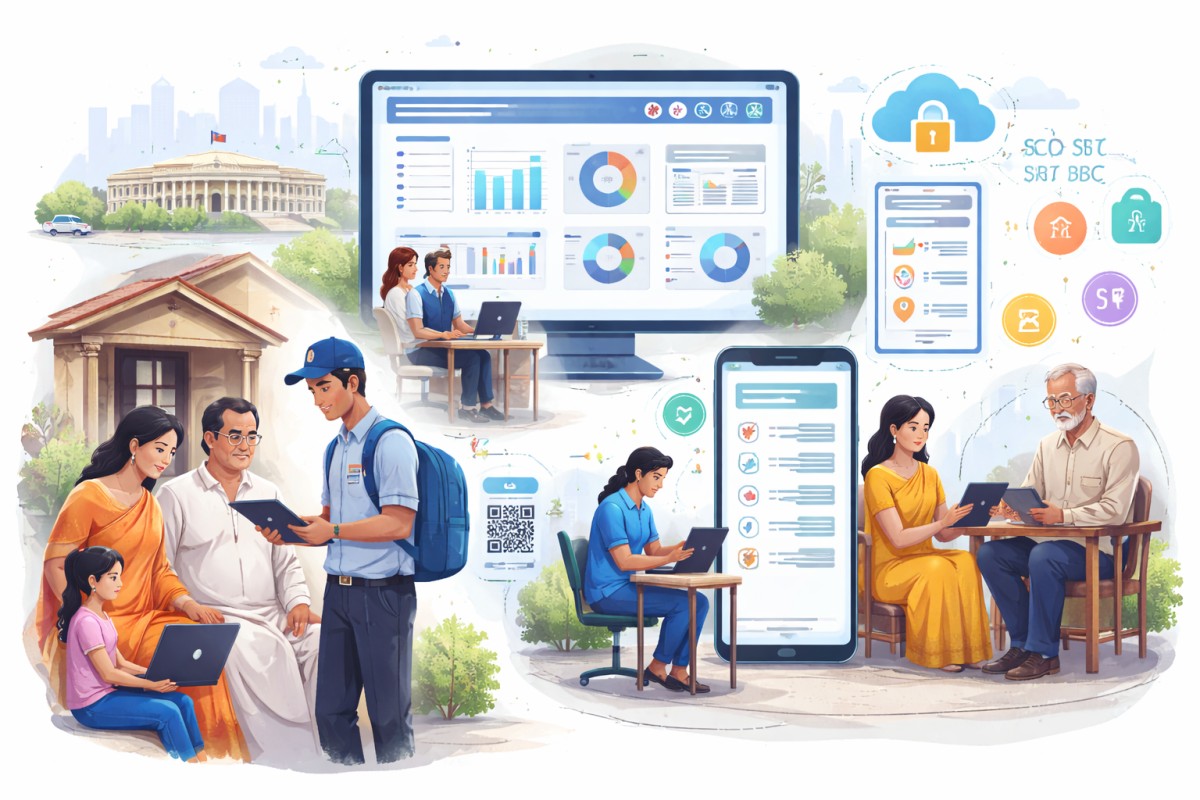
New Delhi, January 26, 2026: India is preparing for its first-ever digital census, a massive administrative undertaking that promises to modernize how the nation’s demographics are captured. The Census 2027 will be conducted in two distinct phases: the first, focusing on house-listing and housing conditions, will run from April to September 2026, while the second phase, population enumeration, is scheduled for February 2027. A significant development in this cycle is the inclusion of a comprehensive caste count, the first of its kind since independence, though the specific methodology for this enumeration is still being finalized and is expected by July 2026.
The transition to a digital format introduces mobile apps for data collection and a dedicated portal for self-enumeration, allowing citizens to submit their own information for the first time. However, the rollout has not been without friction. Opposition parties have raised concerns over the current questionnaire for the first phase, specifically pointing out that Question 12—which asks if the household head is SC, ST, or “Other”—lacks an explicit category for Other Backward Classes (OBC). While officials maintain that detailed caste data will be captured in the second phase, political leaders are calling for more transparency and a clearer commitment to a fair and thorough count.
As the government prepares for trial runs and pre-tests throughout the early months of 2026, the focus remains on ensuring data accuracy and privacy under the Census Act of 1948. With a budget of approximately ₹11,718 crore, the 2027 exercise is set to become a critical baseline for future policy-making, resource allocation, and the upcoming delimitation of parliamentary constituencies.
