
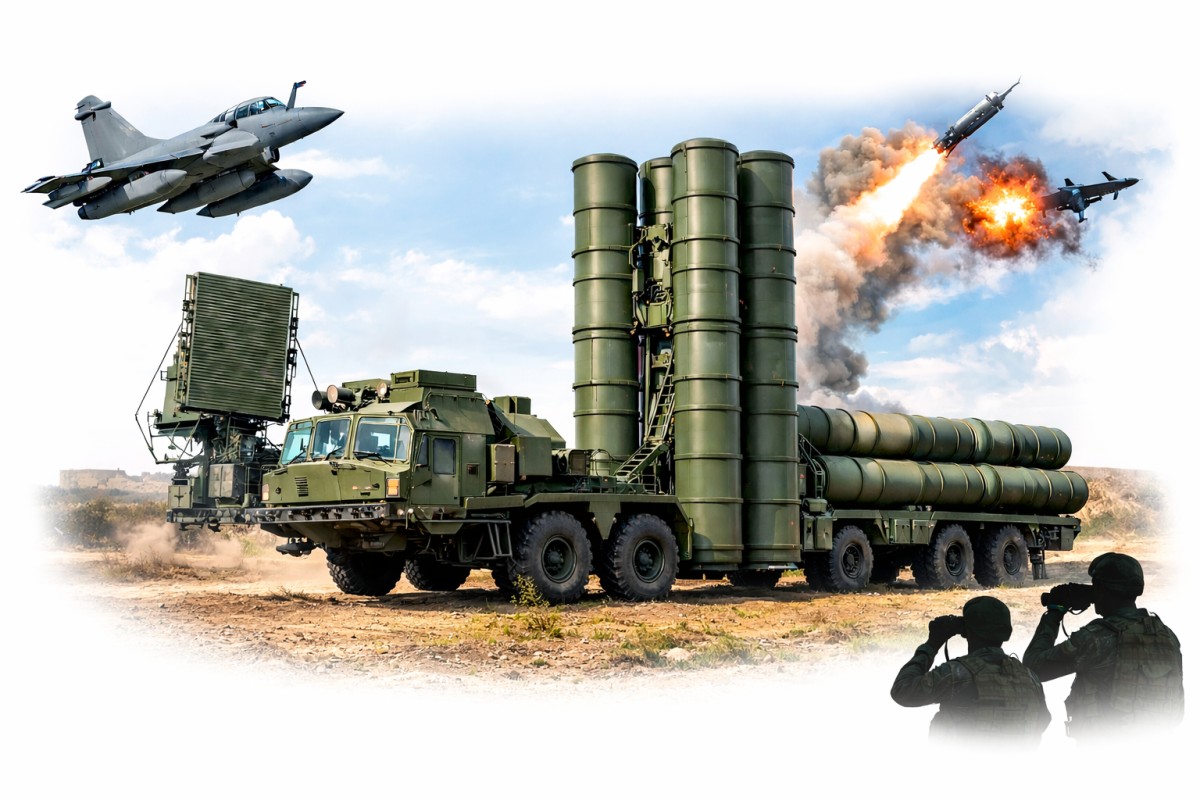
The above image is an illustrative representation, created with AI and does not depict actual individuals or events.
Expansion follows successful deployment in Operation Sindoor, reinforcing deterrence posture.March 3, 2026, New Delhi : The Indian government is moving forward with a significant expansion of its long range air defense capabilities by initiating the purchase of five additional S-400 Triumf squadrons from Russia. This decision marks a major escalation in the country’s defense inventory and aims to provide a comprehensive aerial umbrella over both the western and eastern frontiers. The Ministry of Defence is expected to review the formal proposal shortly, which would eventually bring the total number of these advanced systems in the national arsenal to ten.
This latest procurement drive comes on the heels of the system’s first major operational deployment during a high stakes military engagement last year. Known as Operation Sindoor, the four day conflict in May 2025 saw the S-400, which is locally referred to as the Sudarshan Chakra, take a central role in defending national airspace. According to military reports, the system successfully intercepted and neutralized multiple aerial threats, including several fighter aircraft and a high value surveillance plane.
Air force officials have highlighted the performance of the platform during that skirmish, noting that it achieved a historic long distance intercept by hitting a target approximately 300 kilometers away. The effectiveness of the Russian technology was contrasted with the performance of opposing defense systems during the same period, reinforcing the confidence of the defense establishment in the Triumf’s multi layered tracking and engagement features.
Under the original 2018 agreement, three squadrons have already been delivered and stationed at strategic locations to monitor regional movements. The remaining two units from that initial contract are scheduled to arrive by the end of 2026 and early 2027. By doubling the planned fleet, the air force intends to create a permanent anti access area denial zone that can track up to 160 targets simultaneously. This expansion is viewed as a necessary step to maintain a technological edge and ensure that critical infrastructure remains protected against evolving missile and drone technologies.
