
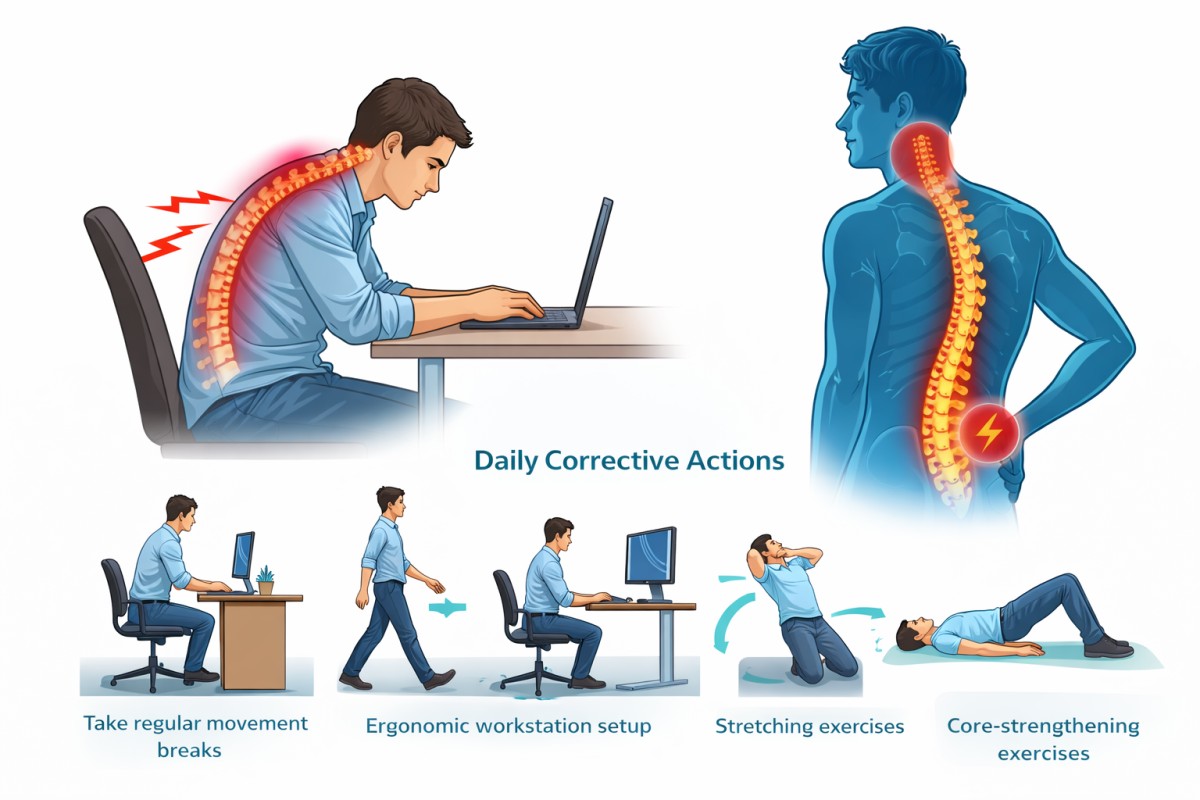
Modern work has quietly reshaped the human body. For millions of young professionals, the typical workday now means sitting for eight to ten hours, eyes fixed on a screen, shoulders rounded, and the spine locked in one position. While this may feel harmless in the short term, medical and physiotherapy evidence increasingly shows that prolonged desk work is contributing to early spinal strain, chronic neck pain, and postural disorders in people even in their 20s and 30s.
The spine is designed for movement, not stillness. Its discs rely on regular motion to maintain nutrition and flexibility. When someone remains seated for long stretches, especially with poor posture, the load on the lower back increases significantly compared to standing. Slouched sitting shifts pressure to the lumbar discs and overstretches supporting ligaments. Over time, this can lead to persistent lower back pain, disc irritation, and muscular imbalance.
The neck is often the first region to suffer. Forward head posture — where the head drifts ahead of the shoulders while looking at a screen — multiplies stress on the cervical spine. For every few centimeters the head moves forward, the effective load on neck structures rises sharply. This pattern is now so common that clinicians often refer to it as “tech neck.” Symptoms include neck stiffness, headaches starting from the base of the skull, shoulder tightness, and sometimes tingling in the arms.
Another overlooked factor is static muscle fatigue. Even if posture looks acceptable, holding one position too long keeps certain muscles continuously active while others remain underused. Chest muscles tighten, upper back muscles weaken, and core support declines. This imbalance alters spinal alignment and reduces shock absorption capacity, making minor strains more likely during routine activities.
Sedentary desk routines also reduce joint mobility. Hip flexors shorten with prolonged sitting, which can tilt the pelvis forward and exaggerate the lower back curve. This change alone can trigger recurring back discomfort. Reduced movement additionally slows circulation, contributing to stiffness and delayed tissue recovery.
The encouraging part is that daily preventive action is simple and effective when done consistently. The first rule is movement frequency. Instead of focusing only on one long workout, break sitting time. Stand or walk for two to three minutes every 30 to 40 minutes. Short movement breaks restore blood flow and reduce disc pressure.
Workstation setup also matters. The top of the screen should be near eye level so the neck stays neutral. The keyboard should allow elbows to rest near the body at roughly 90 degrees. Feet should remain flat on the floor, and the lower back should be supported by the chair or a small cushion. These small adjustments reduce cumulative strain.
Daily mobility exercises can counter desk stress. A practical routine includes chin tucks for neck alignment, chest opening stretches, thoracic extension over a chair back, hip flexor stretches, and gentle spinal rotations. Strength work is equally important. Building endurance in the deep neck flexors, upper back, and core muscles helps maintain upright posture without fatigue.
Eye and breathing habits also influence spinal comfort. People concentrating on screens tend to hold their breath and tense their shoulders. Practicing slow, regular breathing and relaxed shoulder positioning reduces unnecessary muscular load.
Pain should not be ignored when it becomes repetitive. Early physiotherapy assessment can identify posture faults and muscle imbalances before they progress into more serious conditions. Timely correction is far easier than long-term rehabilitation.
Desk work is unlikely to disappear, but spinal damage from desk work is not inevitable. With structured breaks, ergonomic awareness, and ten minutes of daily corrective exercise, young professionals can protect their spines and maintain long-term musculoskeletal health. The body adapts to what it does most often — the key is to make movement part of that routine.
