
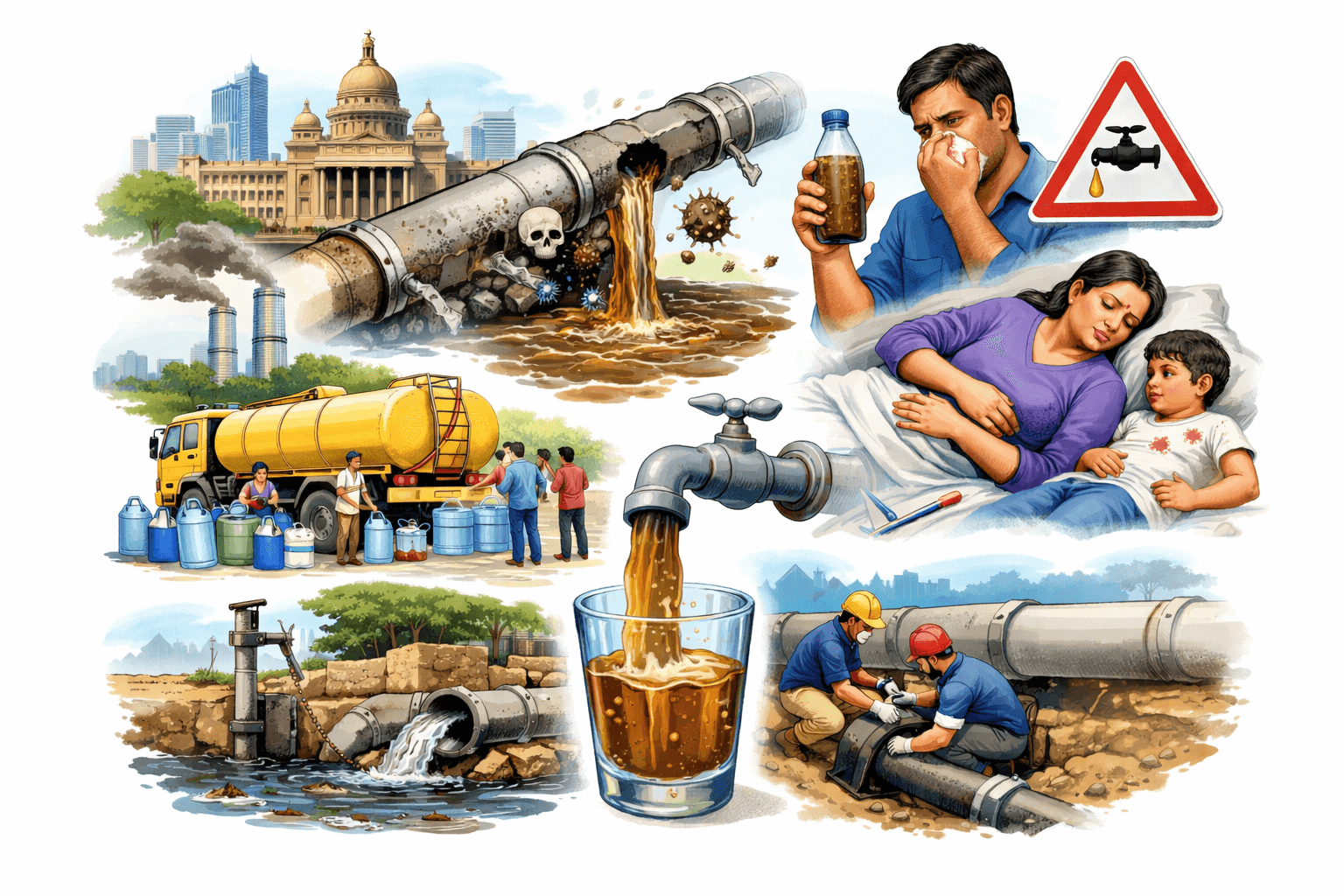
Residents of a Bengaluru neighbourhood woke up to a startling scene on Tuesday: tap water that smelled of sewage and had turned a murky brown. The incident, which affected roughly 30 households, has drawn comparisons to a similar crisis that unfolded in Indore earlier this year, prompting swift action from municipal officials and health agencies.
What happened and how the problem emerged
According to local reports, the contamination was first noticed in the early hours of the morning when residents observed an unusual odor and colour change in water supplied through the public tap system. Preliminary investigations by the Bangalore Water Supply and Sewerage Board (BWSSB) suggest that a breach in a main sewer line allowed untreated sewage to mix with the potable water network.
Engineers identified a cracked pipe near a drainage culvert that runs alongside the residential area. The fault appears to have been caused by recent underground construction activities, which may have displaced or damaged the aging infrastructure. As a result, sewage seeped into the water mains, contaminating the supply that serves the affected block of homes.
Official response and remedial measures
BWSSB officials arrived on site within an hour of the complaint and began isolating the compromised segment of the pipeline. Water distribution to the affected houses was halted, and residents were instructed to use bottled or boiled water for drinking and cooking.
The board has dispatched a mobile water treatment unit to provide safe drinking water while repairs are underway. In parallel, the Karnataka Health Department has sent a team of microbiologists to test the water for bacterial contamination, including Escherichia coli and coliform bacteria, which are common indicators of fecal pollution.
Mayor R. S. Ravikumar publicly assured citizens that the situation is being handled with “the highest priority.” He announced that a comprehensive audit of the city’s aging sewer network will be undertaken to prevent similar incidents in the future. The municipal corporation also pledged financial assistance for households that may need to replace water filters or purchase additional bottled water.
Health implications and safety advice for residents
Health experts warn that consuming water contaminated with sewage can lead to gastrointestinal illnesses, including diarrhea, vomiting, and fever. Vulnerable groups such as children, the elderly, and individuals with weakened immune systems are at greater risk.
Authorities have issued the following safety guidelines:
- Do not drink, cook with, or bathe in the affected water until it is declared safe.
- Use boiled water (minimum 5 minutes) or commercially bottled water for drinking and food preparation.
- Disinfect any stored water containers with a chlorine solution (1 ml of household bleach per litre of water).
- Wash hands with soap and clean water after using the restroom.
- Seek medical attention if you experience persistent stomach cramps, diarrhea, or fever after exposure.
Community reaction and broader context
The incident has reignited public debate over Bengaluru’s water infrastructure, which many residents describe as “over‑stretched and poorly maintained.” Over the past decade, rapid urbanisation has placed unprecedented pressure on the city’s water supply and sewage systems, leading to frequent pipe bursts and water quality complaints.
Local activists have called for a transparent audit of the water network and increased investment in modernising pipelines. They point to the Indore episode, where a similar sewage‑water mix affected thousands, as a cautionary tale that underscores the need for proactive maintenance rather than reactive fixes.
While the current disruption is limited to a small cluster of homes, officials stress that the swift containment measures have prevented a larger public health crisis. The BWSSB expects to restore normal water supply to the affected area within 24‑48 hours, pending successful repairs and clearance from health inspectors.
Residents are encouraged to stay informed through official BWSSB alerts and to report any further anomalies in water quality promptly.
The swift coordination between municipal authorities, health officials, and the community highlights Bengaluru’s commitment to safeguarding public health, even as the city grapples with the challenges of rapid growth and ageing utilities.
