
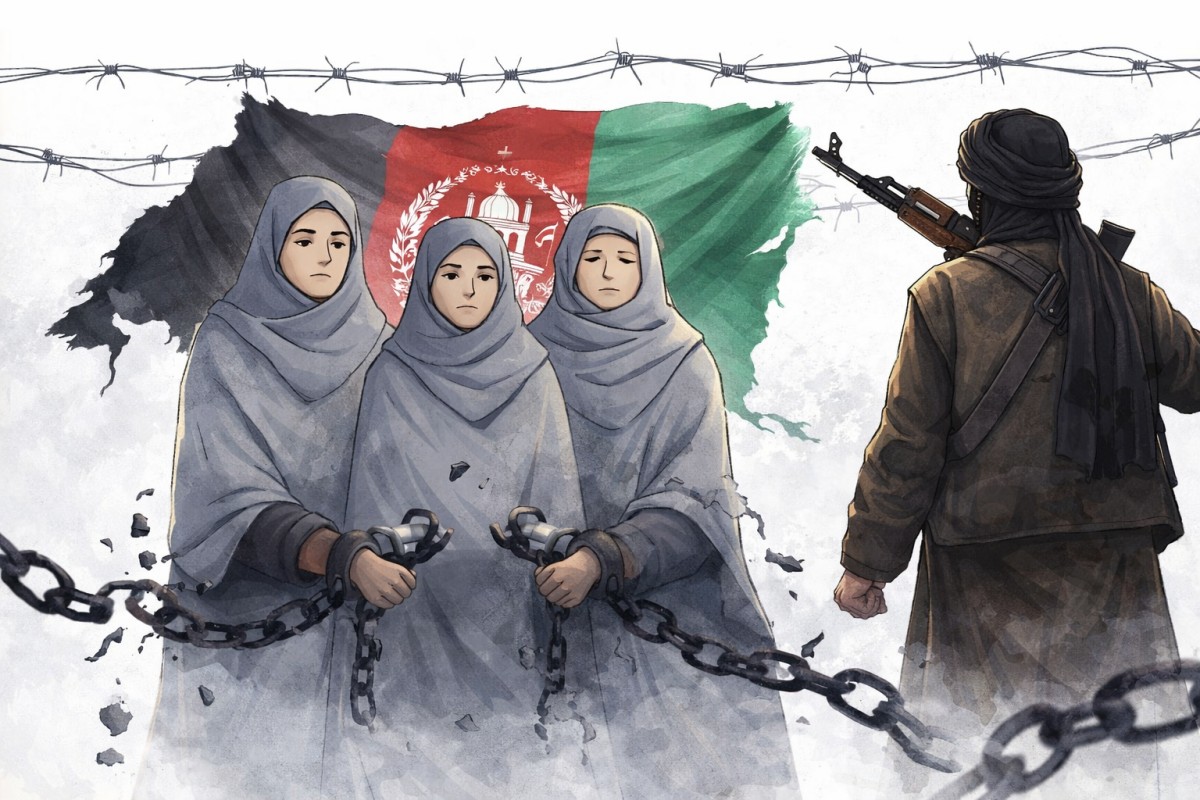
As the world moves deeper into another year of geopolitical churn, Afghanistan remains trapped in a grim paradox. While international attention shifts from one crisis to another, millions of Afghan women and girls continue to live under a system that deliberately excludes them from public life, education and economic participation. This is not an unintended consequence of instability or poverty. It is policy.
More than three years after the Taliban returned to power, the situation for women has not stabilised or improved. Instead, restrictions have multiplied. Girls remain barred from secondary schools. Universities are closed to women. Employment opportunities have shrunk to the margins, and even humanitarian work has become increasingly inaccessible. International human rights experts have rightly described this system as gender apartheid — a term that reflects both the scale and the intent of the discrimination.
What makes the current moment especially troubling is not only the persistence of these policies, but the growing willingness of parts of the international community to normalise relations with the Taliban despite them. Some governments, particularly in Europe, have increased engagement with Kabul as part of efforts to return failed asylum seekers. Others have reopened diplomatic channels under the banner of pragmatism or regional stability. Each such step, however cautiously framed, lends legitimacy to a regime that has shown no inclination to soften its stance on women’s rights.
The argument often made is that engagement offers leverage. In practice, that leverage appears increasingly illusory. Years of talks, meetings and back-channel diplomacy have produced no meaningful concessions on girls’ education or women’s participation in public life. Even multilateral forums have struggled to extract commitments, let alone action. The absence of women from negotiations about their own rights speaks volumes about the limits of this approach.
Meanwhile, the cost of inaction is not abstract. Afghanistan’s population has crossed 40 million and continues to grow. Economic collapse, mass unemployment and forced returns of refugees from neighbouring countries are placing enormous strain on an already fragile society. Excluding half the population from education and work is not only a moral failure, it is an economic dead end. No country can recover, let alone prosper, while systematically denying women the chance to contribute.
There have been efforts to push the issue into the realm of international law. As the UN preparatory committee meets this month to refine the draft treaty on crimes against humanity, the window to formally codify gender apartheid is finally open. This marks a significant evolution from mere discourse toward a tangible legal framework. Furthermore, arrest warrants issued by international courts against senior Taliban figures for gender-based persecution have sent a clear signal that accountability remains on the table, even if enforcement remains a complex challenge. Yet, these measures risk losing their force if they are not matched by a consistent and unified political will from the international community.
Complicating matters further is the shifting global order. Countries such as China and Russia have pursued their own strategic interests in Afghanistan, while regional powers have recalibrated ties based on security and economic considerations. In this environment, the pressure on the Taliban has become fragmented and uneven. Without coordination, sanctions weaken, messages blur and red lines fade.
Pressuring the Taliban to end its gender policies is not merely a question of values. It is a question of long-term stability. A society that sidelines women condemns itself to deeper poverty, social fracture and perpetual dependency on aid. The humanitarian crisis Afghanistan faces today cannot be separated from the political choices imposed on its women and girls.
The international community still has tools at its disposal — diplomatic isolation, targeted sanctions, legal action and conditional engagement — but these tools only matter if they are used coherently. Restoring “normal” relations without progress on women’s rights does not stabilise Afghanistan; it entrenches injustice.
History will judge not only those who imposed this system, but those who chose to look past it. The fate of Afghan women is not a side issue to be managed quietly. It is the central test of whether global commitments to human rights carry weight when they are inconvenient.
