
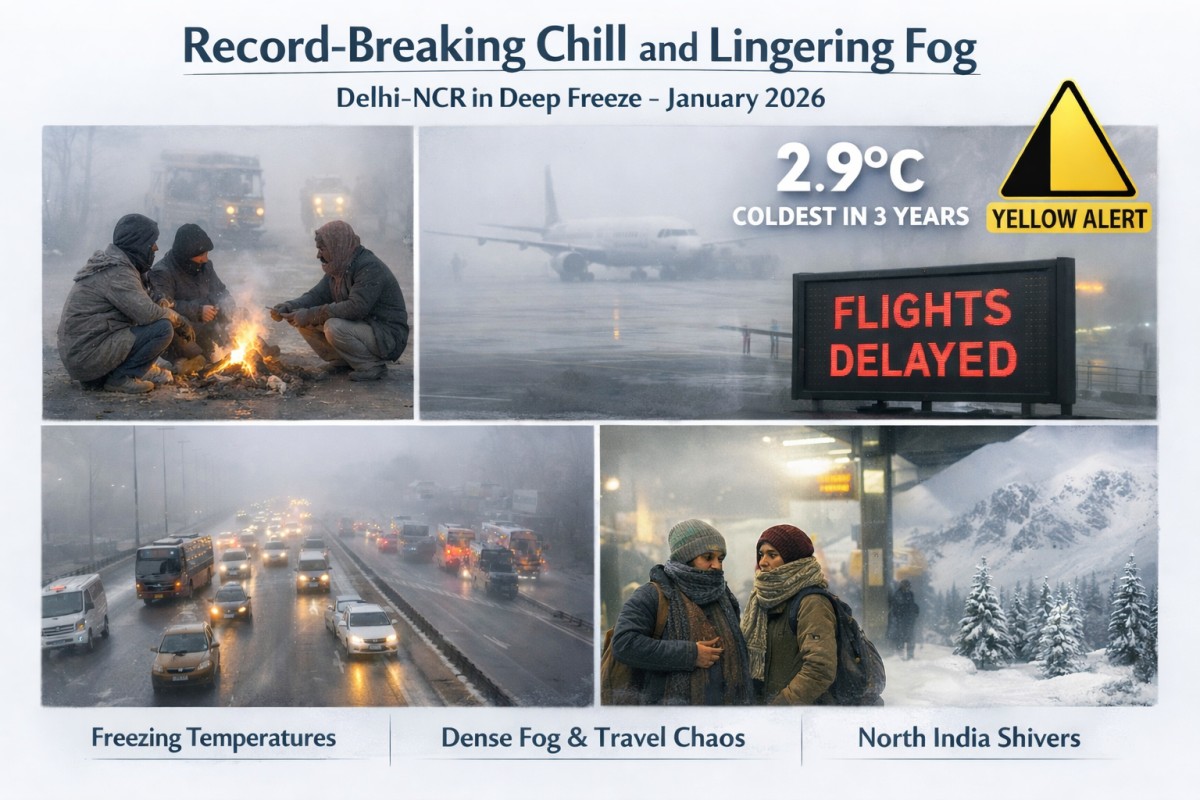
NEW DELHI, JANUARY 15: 2026India’s National Capital Region (NCR), including Delhi, is currently enduring an intense and prolonged cold wave, with temperatures plummeting to record lows for the season. A thick blanket of fog has enveloped the region, severely impacting daily life and causing significant disruptions, particularly to air travel. The India Meteorological Department (IMD) has issued a ‘yellow’ alert, signaling the persistence of these harsh conditions and advising residents to take necessary precautions as the cold snap continues its relentless grip.
Record-Breaking Chill and Lingering Fog
The winter of 2024 has delivered an extraordinary cold spell to Delhi and the surrounding NCR, with the capital experiencing its coldest morning of the season, registering a chilling 2.9 degrees Celsius. This marks the lowest January temperature in three years, as reported by meteorological observatories across the region. Noida, a key part of the NCR, recorded temperatures as low as 2 degrees Celsius, underscoring the severity of the cold wave that has now persisted for four consecutive days. The minimum temperatures are significantly below the seasonal average, creating conditions reminiscent of severe winter events.
The persistent cold is exacerbated by dense to very dense fog that has reduced visibility to critically low levels, particularly during early morning hours. This atmospheric phenomenon, characterized by moisture-laden air and low temperatures, creates a challenging environment for commuters and essential services. The combination of extreme cold and limited visibility poses considerable risks, prompting advisories for reduced travel and increased caution.
Beyond the immediate Delhi-NCR region, the intense cold wave has spread its icy tendrils across northern India. States like Punjab and Haryana are also reeling under severe cold, with temperatures dipping sharply. Furthermore, the higher altitudes of Kashmir have reported sub-zero night temperatures, indicating a widespread and intense winter pattern across the northern parts of the country. This broader geographical impact highlights the significant meteorological event currently underway, affecting millions of citizens.
Widespread Disruptions and Official Alerts
The ongoing cold wave and dense fog have led to widespread disruptions across various sectors. The most immediate and visible impact has been on air travel. Numerous flights originating from and destined for Indira Gandhi International Airport (IGIA) in Delhi have faced significant delays or cancellations due to the extremely poor visibility. Air traffic control has implemented strict procedures, leading to a ripple effect across the national aviation network. Passengers have been advised to check their flight statuses with airlines before heading to the airport.
Road transport has also been severely affected. Reduced visibility on major highways and arterial roads has increased the risk of accidents and significantly slowed down traffic, extending commute times for thousands. Public transportation services are operating under challenging conditions, and emergency services are on heightened alert. The agricultural sector is also facing concerns, with potential impacts on crops due due to the prolonged exposure to freezing temperatures.
In response to the deteriorating weather conditions, the India Meteorological Department has issued a ‘yellow’ alert for the Delhi-NCR region. This alert serves as a warning to the public and relevant authorities, indicating that the weather conditions could significantly impact daily activities and health. While not as severe as an ‘orange’ or ‘red’ alert, a ‘yellow’ alert suggests that residents should “be aware” of the potential for hazardous conditions, including dense fog, cold wave, and ground frost. Authorities are closely monitoring the situation, and advisories are being issued to ensure public safety and mitigate the effects of the harsh winter.
Key Points of the Delhi-NCR Cold Wave:
- Delhi recorded its coldest morning of the season at 2.9°C, marking a three-year low for January.
- Noida experienced temperatures as low as 2°C, signifying the intensity of the cold wave.
- The cold wave has persisted for four consecutive days across the NCR.
- Dense to very dense fog has severely impacted visibility, especially during morning hours.
- Flight operations at Delhi’s Indira Gandhi International Airport have been significantly delayed or canceled.
- The India Meteorological Department (IMD) has issued a ‘yellow’ alert for the region, advising caution.
- Neighboring states like Punjab, Haryana, and Kashmir are also experiencing intense cold conditions.
- Public health advisories recommend precautions against cold-related illnesses.
As the frigid conditions are forecast to continue for the foreseeable future, residents of Delhi-NCR and other affected northern states are urged to remain vigilant. Staying indoors, wearing multiple layers of warm clothing, and minimizing non-essential travel are critical measures. Authorities continue to monitor the evolving weather patterns and are prepared to issue further guidance as the region navigates through one of its most challenging winter seasons in recent memory. The focus remains on ensuring public safety and minimizing the disruptions caused by this extreme weather event.
