
Environmental Crisis
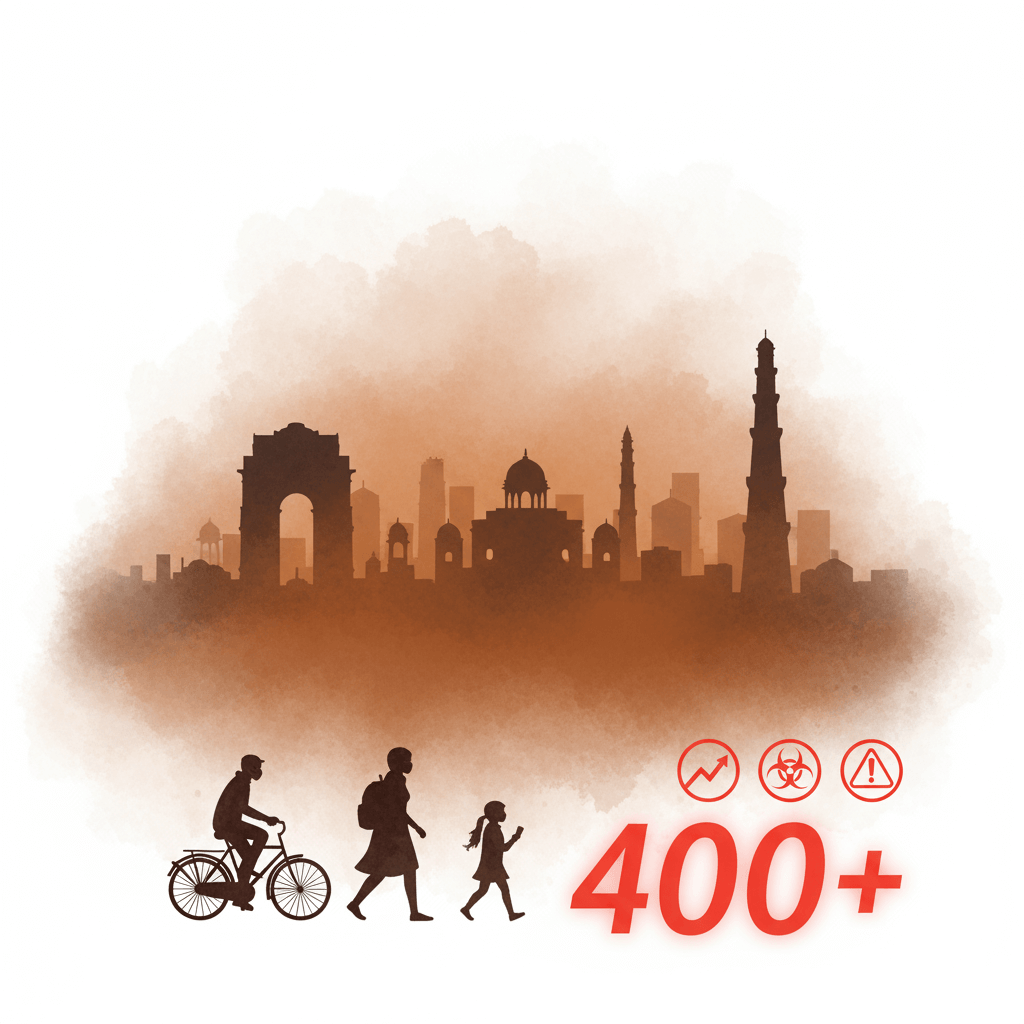
The capital city of Delhi is battling a critical wave of air pollution, with its air quality plunging into the Severe category as the Air Quality Index (AQI) crossed the 400 mark in multiple monitoring zones on November 8. According to data released by the Central Pollution Control Board (CPCB), while the city’s overall average AQI registered 361 (Very Poor), a staggering 15 monitoring stations recorded levels well into the danger zone, effectively pushing several pockets of the metropolitan area into the ‘red zone.’ Localities like Wazirpur (424), Burari Crossing (420), and Alipur (417) experienced the worst air, with concentrations of PM2.5 pollutants far exceeding safe exposure limits. This toxic atmospheric shift has significantly reduced visibility and prompted widespread public reports of respiratory discomfort. In response, and despite the highest-level Stage 3 restrictions under the Graded Response Action Plan (GRAP) not yet being fully triggered, the Delhi government has taken action by staggering office timings to alleviate peak-hour traffic emissions. Health advisories strongly recommend that residents minimize their time outdoors and utilize masks, as the city faces an acute test of its environmental and public health resilience with continued poor air quality forecasted.
