
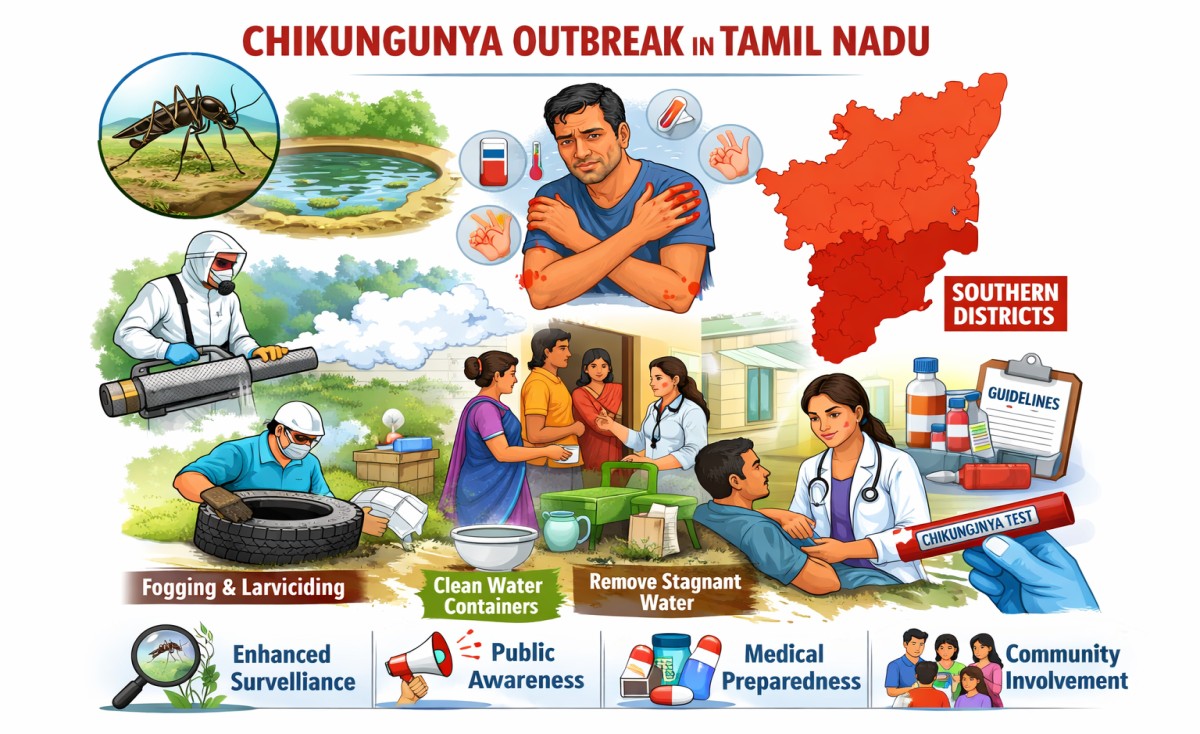
Chennai, January 23, 2026: : Tamil Nadu is currently experiencing a notable increase in Chikungunya cases across various districts, prompting the state’s health department to issue comprehensive guidelines and intensify its public health surveillance. The rise in vector-borne diseases during the monsoon season is a recurring concern, and health officials are taking proactive steps to mitigate the spread of the virus and protect the public.
Understanding the Chikungunya Surge and Its Impact
Chikungunya, a viral disease transmitted to humans by infected mosquitoes, particularly Aedes aegypti and Aedes albopictus, is characterized by sudden onset of fever and severe joint pain. Other symptoms may include muscle pain, headache, nausea, fatigue, and rash. While the disease is rarely fatal, the joint pain can be debilitating and may persist for weeks, months, or even years, significantly impacting the quality of life for those affected. The current surge in cases highlights the persistent challenge of managing mosquito populations and preventing outbreaks in densely populated areas.
Reports from various regions within Tamil Nadu indicate a concentrated increase in infections, particularly in the southern districts. This geographical spread necessitates a localized yet coordinated response from health authorities. Factors contributing to the rise often include stagnant water bodies created by recent rainfall, which serve as ideal breeding grounds for the Aedes mosquito, combined with insufficient public awareness or adherence to preventative measures in some communities. The incubation period for Chikungunya typically ranges from 2 to 12 days, making early detection and intervention crucial to curbing its transmission.
Healthcare facilities are observing a growing number of patients presenting with classic Chikungunya symptoms. Clinicians are advised to maintain a high index of suspicion, especially in areas reporting increased vector activity. Accurate diagnosis, often confirmed through blood tests, is essential not only for patient management but also for epidemiological tracking to understand the true burden of the disease and target control efforts effectively.
Tamil Nadu’s Proactive Public Health Response
In response to the escalating situation, the Tamil Nadu Health Department has mobilised its resources to implement a multi-pronged strategy aimed at containment and public safety. The core of this strategy revolves around enhanced surveillance, stringent vector control measures, and extensive public awareness campaigns. Guidelines issued to all district health officials, local bodies, and medical professionals emphasise the importance of community participation in combating the spread of the virus.
Key directives include intensifying source reduction activities, which involve eliminating mosquito breeding sites in and around homes, workplaces, and public spaces. This includes regularly emptying and cleaning water storage containers, discarding old tires, broken pots, and any items that can collect rainwater. Fogging operations are also being conducted in affected areas to reduce adult mosquito populations. Furthermore, health workers are conducting door-to-door surveys to identify fever cases, provide immediate care, and educate residents on preventive practices.
Medical institutions have been instructed to ensure adequate stock of necessary medicines and diagnostic kits. Healthcare providers are also being sensitised on the latest protocols for managing Chikungunya cases, focusing on symptomatic relief, pain management, and preventing complications. Emphasis is placed on advising patients to rest, stay hydrated, and seek medical attention if symptoms worsen. The government is also monitoring the situation closely through a dedicated task force to ensure swift and coordinated action across the state.
Community Engagement and Future Preparedness
Beyond immediate control measures, the state government is stressing the critical role of community engagement in long-term prevention. Public health campaigns are disseminating information through various media channels, including print, electronic, and social media, to educate citizens on the dangers of Chikungunya and simple yet effective preventive steps. These campaigns encourage individuals to use mosquito repellents, wear protective clothing, and install screens on windows and doors. The importance of reporting stagnant water or unmanaged waste to local authorities is also being highlighted.
Looking ahead, health officials are evaluating current strategies to strengthen future preparedness for vector-borne disease outbreaks. This includes investing in better infrastructure for waste management, improving drainage systems, and conducting regular epidemiological studies to understand patterns of disease transmission. Collaborative efforts between various government departments, non-governmental organisations, and local communities are deemed essential to build a resilient public health system capable of effectively responding to such challenges.
- Enhanced Surveillance: Daily monitoring of fever cases and vector indices in affected areas.
- Source Reduction: Aggressive campaigns to eliminate mosquito breeding sites in homes and public spaces.
- Public Awareness: Extensive education drives on prevention, symptoms, and seeking timely medical care.
- Medical Preparedness: Ensuring adequate supplies of medicines and diagnostic tools in healthcare facilities.
- Community Involvement: Encouraging active participation of citizens in maintaining hygiene and reporting potential risks.
- Integrated Vector Management: Coordinated efforts for fogging, larviciding, and environmental sanitation.
The rise in Chikungunya cases in Tamil Nadu underscores the continuous battle against vector-borne diseases. While the government has implemented robust measures, the success of these efforts ultimately depends on sustained public cooperation and adherence to preventive guidelines. By working together, the community and health authorities can significantly reduce the incidence of Chikungunya and safeguard public health across the state.
