
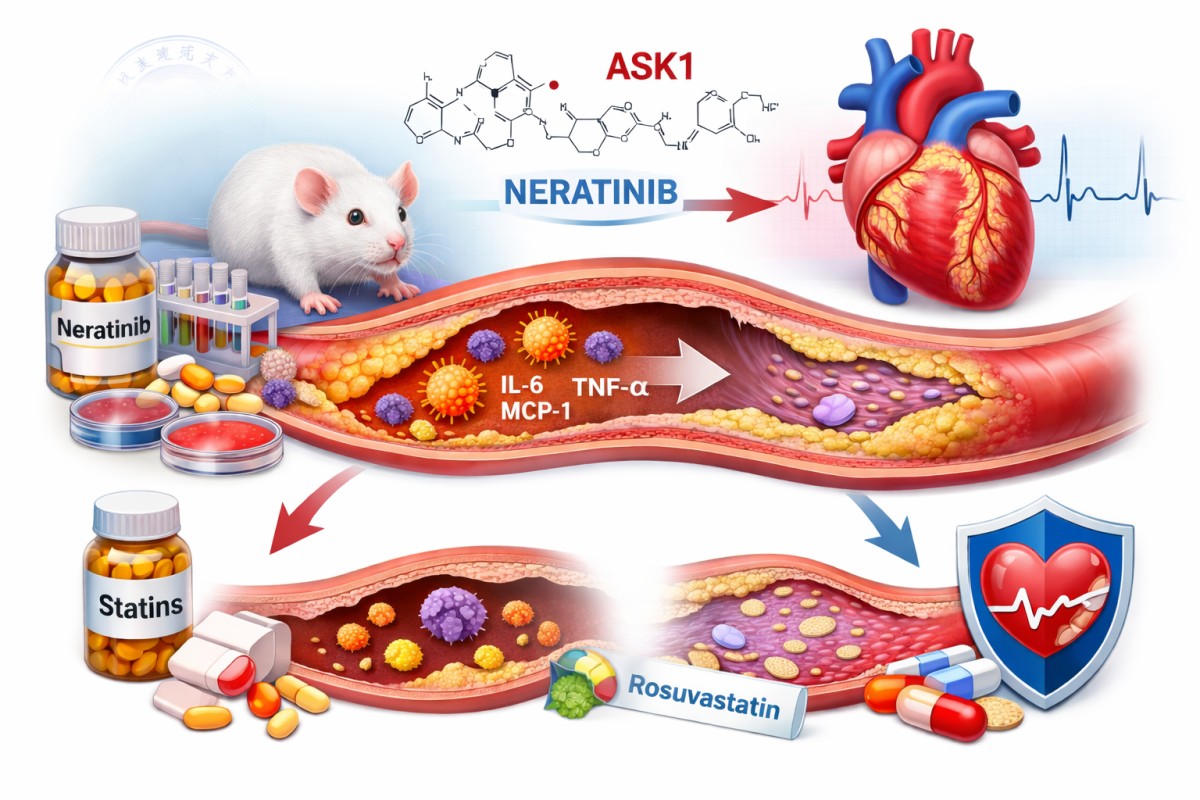
Recent pre‑clinical research indicates that the cancer drug Neratinib, which targets the ASK1 protein in addition to its traditional targets, could significantly reduce vascular inflammation—a key driver of atherosclerosis—opening new avenues for cardiovascular therapy.
Study Overview and Methodology
Scientists from the University of Science and Technology of China (USTC) conducted a controlled laboratory study using mouse models that mimic human atherosclerotic disease. The animals were administered Neratinib, an oral pan‑HER (human epidermal growth factor receptor) inhibitor traditionally used for HER2‑positive breast cancer. Researchers measured inflammatory markers, plaque size, and arterial wall integrity over a six‑week treatment period, comparing results with a placebo group and a group receiving standard statins.
Key Findings
The investigation yielded several notable outcomes:
- Significant reduction in macrophage infiltration within arterial plaques, indicating lowered inflammatory activity.
- Decreased expression of pro‑inflammatory cytokines such as IL‑6, TNF‑α, and MCP‑1 in treated mice via the inhibition of the ASK1 signaling pathway.
- Stabilization of plaque composition, with a higher proportion of collagen and smooth‑muscle cells, suggesting reduced risk of rupture.
- No observable adverse effects on liver or kidney function at the administered dose, though the study emphasizes that the anti-inflammatory effect is independent of the drug’s usual HER2 target.
Implications for Cardiovascular Treatment
These results suggest that repurposing Neratinib could complement existing lipid‑lowering strategies, targeting the “residual inflammatory risk” of atherosclerosis that statins alone do not fully address. Notably, the researchers found that Neratinib worked synergistically when combined with Rosuvastatin, providing a more comprehensive approach to vessel health. The study’s authors propose further clinical trials to assess safety, optimal dosing, and efficacy in human patients with established coronary artery disease.
While the findings are promising, experts caution that translation from animal models to clinical practice requires rigorous testing. Potential drug‑drug interactions, especially with common cardiovascular medications, must be evaluated before Neratinib can be recommended for routine use.
At a Glance
- Neratinib, a HER inhibitor and ASK1 blocker, reduces vascular inflammation in mouse models of atherosclerosis.
- Treatment leads to smaller, more stable arterial plaques without major organ toxicity in pre‑clinical trials.
- Findings support further investigation into drug repurposing for heart disease to address inflammation.
As cardiovascular disease remains the leading cause of mortality worldwide, innovative approaches that address both lipid accumulation and inflammation are urgently needed. If subsequent human trials confirm these pre‑clinical outcomes, Neratinib could become a valuable addition to the therapeutic arsenal against atherosclerosis.
