
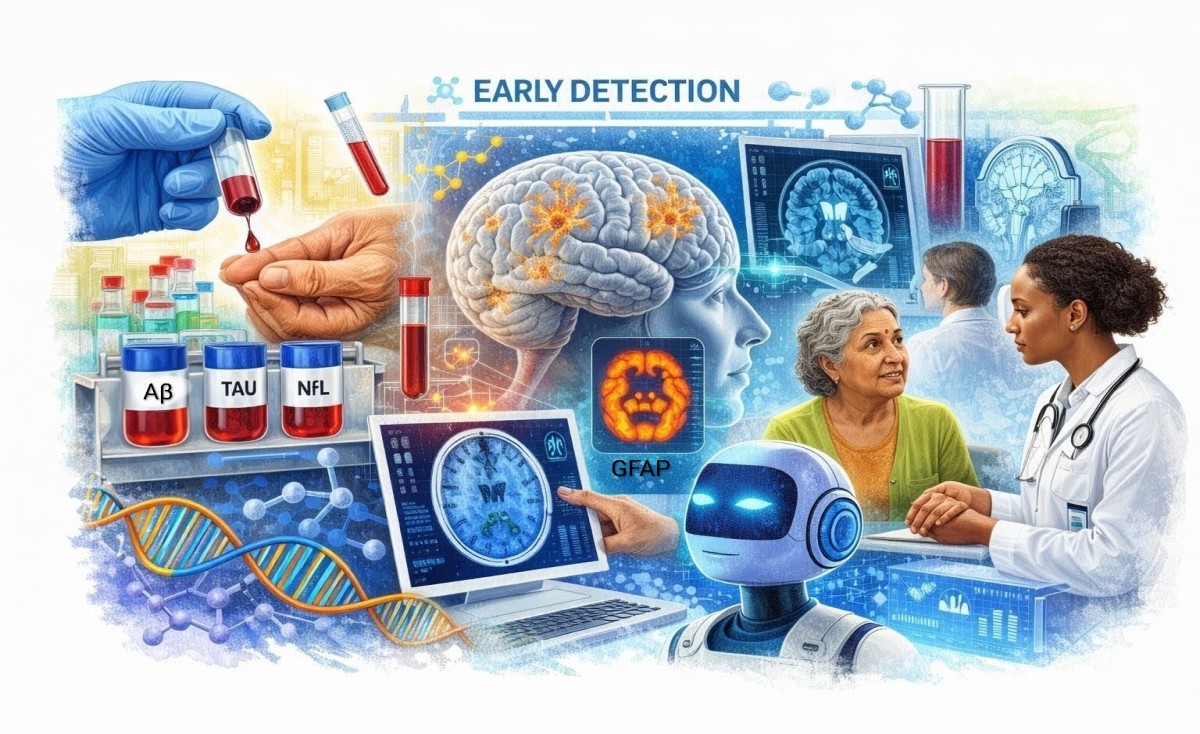
January 20, 2026 : A significant advancement in the fight against Alzheimer’s disease is on the horizon, as diagnostic laboratories and research institutions unveil a novel blood biomarker test combined with advanced imaging techniques. This innovative approach promises to revolutionize early detection, moving away from invasive and costly procedures towards a more accessible and less daunting diagnostic pathway. Experts believe this development could drastically transform how Alzheimer’s is identified, enabling earlier interventions and improving patient outcomes globally.
The Promise of Non-Invasive Biomarkers
For decades, diagnosing Alzheimer’s disease definitively has been a complex and often late-stage process, typically involving expensive brain imaging such as PET scans or invasive lumbar punctures to analyze cerebrospinal fluid. These methods are not only burdensome for patients but also limit widespread screening, especially in resource-constrained settings. The advent of blood biomarker tests represents a paradigm shift, offering a simpler, more accessible alternative. These tests are designed to detect specific proteins and other biological indicators in the blood that are associated with the presence and progression of Alzheimer’s pathology, even before significant cognitive decline manifests.
The core principle behind these blood tests is to identify key biomarkers like amyloid-beta and tau proteins, which are hallmarks of Alzheimer’s disease, or neurofilament light chain (NfL), an indicator of neuronal damage. By detecting these markers at an earlier stage, healthcare providers could potentially intervene before irreversible damage occurs. The “finger-prick” nature of some of these proposed tests further emphasizes their potential for widespread adoption, making screening feasible in primary care settings and reducing the need for specialized neurological centers for initial assessment.
Integrating Imaging and AI for Precision Diagnosis
While blood tests offer a non-invasive initial screen, combining them with advanced imaging techniques enhances diagnostic precision. The integration of blood biomarker results with sophisticated brain imaging, such as structural MRI or amyloid PET scans, allows for a more comprehensive understanding of a patient’s neurological status. This layered approach helps confirm the presence of Alzheimer’s pathology and provides a detailed view of its impact on brain structure and function, leading to a more accurate and confident diagnosis.
Adding another layer of innovation, Artificial Intelligence (AI) is playing a crucial role in analyzing the vast and complex data generated by both blood tests and imaging. AI algorithms can identify subtle patterns and correlations that might be missed by the human eye, improving the accuracy and efficiency of diagnosis. In countries like India, where an estimated 8.8 million people live with dementia, AI-driven diagnostic tools could be instrumental in scaling up early detection efforts, making advanced diagnostics more accessible to larger populations and alleviating the strain on existing healthcare infrastructure.
Implications for Treatment and Global Health
The ability to diagnose Alzheimer’s earlier has profound implications for patient care, research, and public health. Early detection opens the door to timely therapeutic interventions, including emerging disease-modifying treatments that are most effective in the early stages of the disease. Patients could also gain access to clinical trials earlier, contributing to the development of new therapies and potentially altering the trajectory of their condition. Furthermore, an early diagnosis allows individuals and their families to plan for the future, make informed decisions, and access support services more effectively.
From a global health perspective, these advancements could significantly reduce the immense societal and economic burden of Alzheimer’s disease. By improving diagnostic accessibility and efficiency, healthcare systems can better allocate resources, reduce long-term care costs, and enhance the quality of life for millions affected by this devastating condition. Research companies are actively seeking participants for ongoing studies, underscoring the dynamic and evolving nature of this critical field and the collective push towards a future where Alzheimer’s can be managed and potentially prevented.
The convergence of non-invasive blood tests, advanced imaging, and artificial intelligence marks a pivotal moment in Alzheimer’s research. This synergistic approach promises not only to streamline the diagnostic process but also to empower healthcare providers with the tools needed for earlier, more accurate detection. As these innovations become more widely available, they hold the potential to transform the lives of countless individuals and families worldwide, ushering in a new era of proactive Alzheimer’s management and hope.
- Less invasive diagnostic method through simple blood tests.
- Potential for significantly earlier detection of Alzheimer’s pathology.
- Enhanced diagnostic accuracy through combination with advanced imaging.
- AI integration for efficient and precise analysis of complex data.
- Increased accessibility to diagnostics, especially in underserved regions.
- Opens pathways for earlier therapeutic interventions and clinical trial participation.
- Potential to reduce healthcare costs and the global burden of dementia.
