
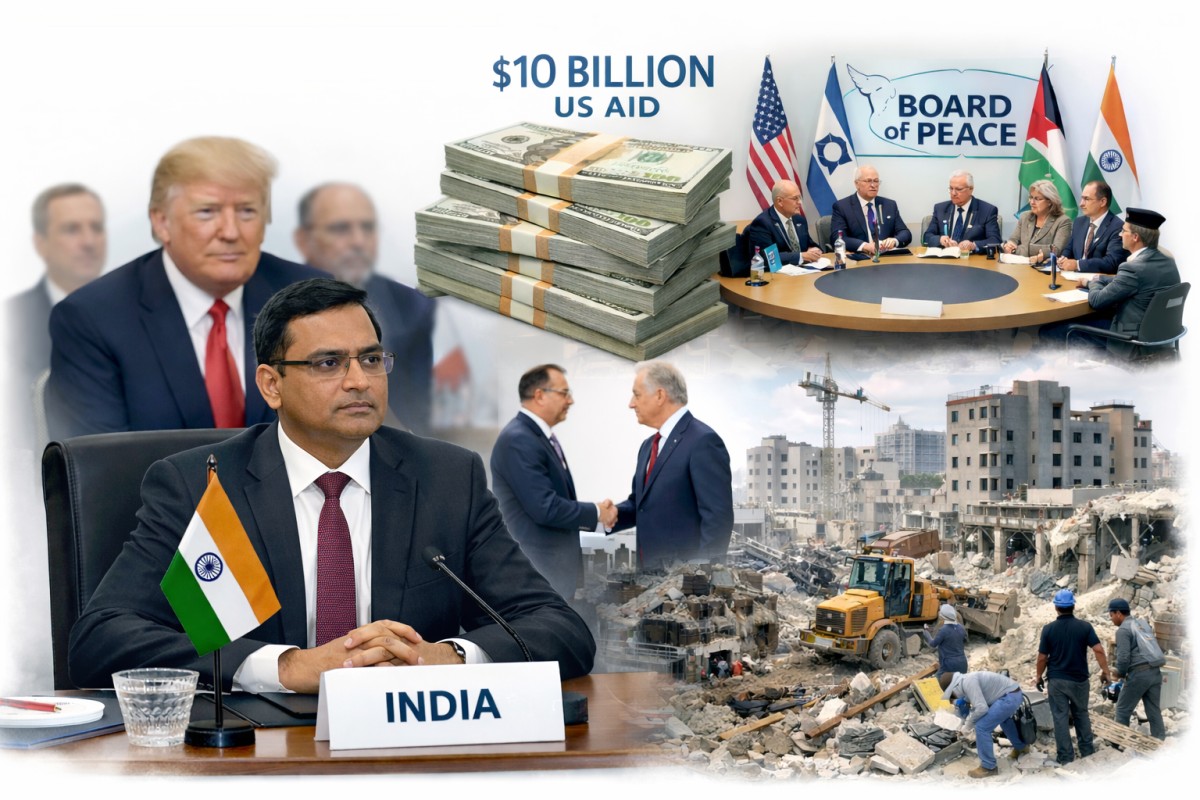
The above image is representational image created for illustrative purposes only and does not depict any specific real-life meeting or individual.
February 20, 2026, Washington, D.C: India participated as an observer in the inaugural meeting of the Board of Peace on Gaza held on Thursday. The event took place at the newly designated Donald J. Trump Institute of Peace, marking a significant moment in the evolving diplomatic landscape of the Middle East. India was represented at the session by Namgya Khampa, the Chargé d’affaires at the Indian Embassy in Washington, signaling a cautious but present engagement with the new international body.
The Board of Peace was established during the second phase of a ceasefire agreement between Israel and Hamas. During the proceedings, the United States committed 10 billion dollars toward the board’s efforts, which are primarily focused on the large-scale redevelopment and reconstruction of the Gaza Strip following two years of intense conflict. While nine other member nations, including Saudi Arabia and the United Arab Emirates, pledged a combined 7 billion dollars for immediate relief, the American contribution is intended to anchor the long-term operational framework of the organization.
Prime Minister Narendra Modi was among the world leaders personally invited by the US administration to join the board as a permanent member. New Delhi has maintained a deliberate stance on the invitation, choosing the observer role for the time being. This position allows India to stay informed on the reconstruction process while it evaluates the broader implications of the board’s mandate. The Ministry of External Affairs previously indicated that it is reviewing the proposal, noting India’s traditional support for peace in West Asia.
The emergence of the Board of Peace has sparked global discussion regarding its relationship with established multilateral institutions. Because the board operates under a model where permanent membership is linked to significant financial contributions, it is increasingly perceived by diplomatic analysts as a potential rival to the United Nations. Critics and observers have noted that the body could represent a shift toward minilateralism, potentially creating an alternative venue for conflict resolution and humanitarian governance outside of traditional UN channels.
The meeting also touched upon the implementation of an international stabilization force. Several countries, including Morocco and Indonesia, have indicated a willingness to contribute personnel to ensure security during the rebuilding phase. Despite these commitments, the total estimated cost for the full restoration of Gaza remains significantly higher than the initial pledges, leaving the board with a substantial financial and logistical task ahead.
