
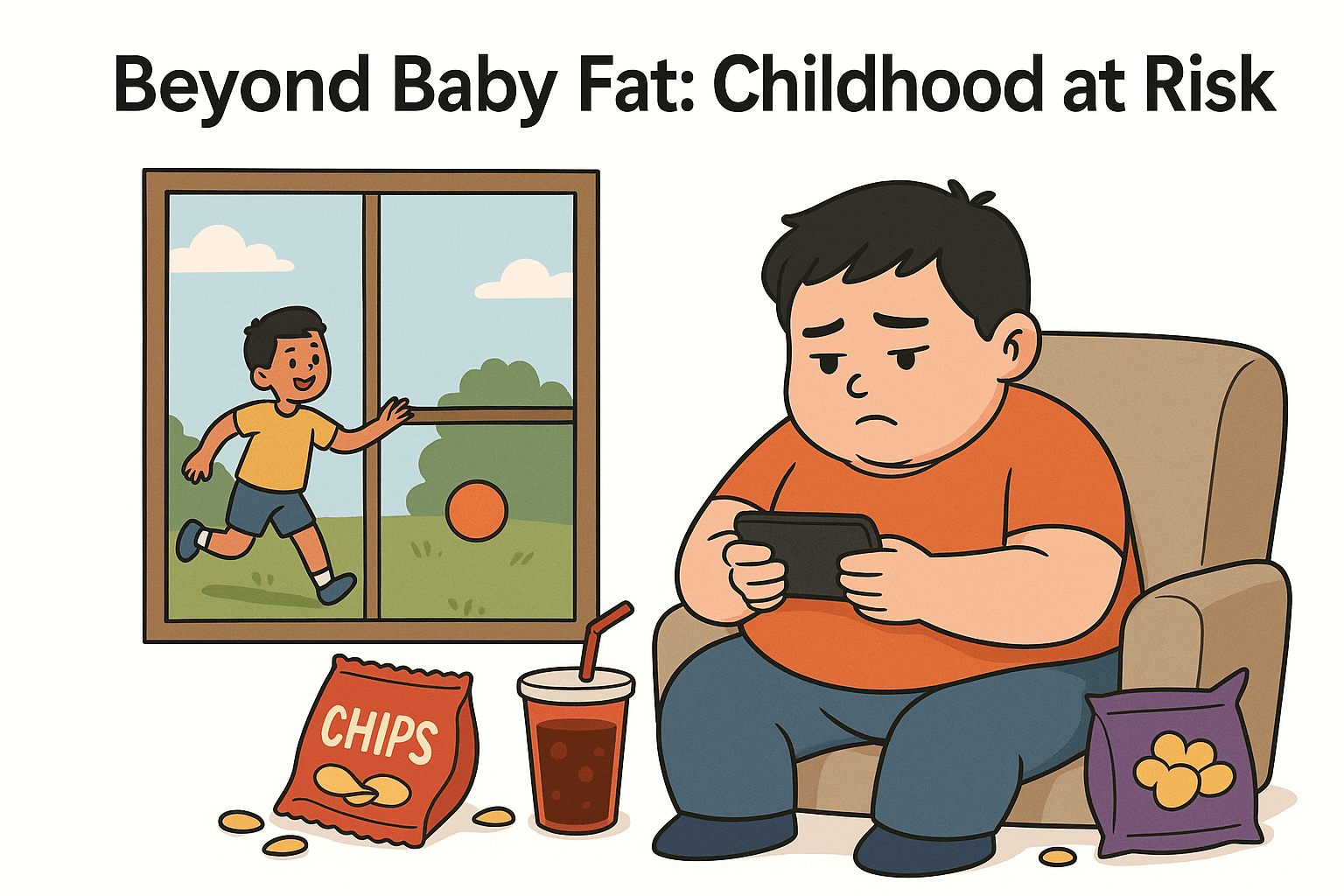
In living rooms across India — whether in Mumbai high-rises, small town lanes, or rural hamlets — a worrying trend is quietly unfolding. A child sits glued to a smartphone or tablet. Chips, sugary drinks and processed snacks lie within easy reach. Outdoor playtime vanishes. For many parents, the pudgy cheeks and “healthy appetite” seem harmless, even endearing. Yet national health data show that more than 6% of Indian adolescents are already overweight or obese, and scientific studies estimate that nearly one in five urban children carries excess weight. But the truth is far more serious: childhood overweight and obesity are rising sharply, and parents may not yet see the danger.
The root causes are familiar — and close to home
What is driving this surge? Many factors combine, often without parents realizing the harm:
• Sedentary lifestyles: With rising academic pressures, urban living constraints, and increased screen-time, children are far less physically active than even a generation ago. Walking to school, playing outdoors, or running freely — once natural parts of childhood — are becoming rare luxuries.
• Dietary shifts: Traditional, home-cooked meals increasingly give way to processed, high-calorie, low-nutrient foods. Snacks, sugary drinks, and fast food are often treated as everyday food. Families often mistake quantity for nourishment.
• Cultural norms and comfort: In many homes, a “chubby child” is seen as a well-nourished child. Compliments and social acceptance can reinforce excessive weight gain, while concerns about a child’s health are brushed aside.
• Lack of awareness: Unlike malnutrition due to underweight, which has historically received attention in India, overweight and obesity are still socially misunderstood. Many parents do not recognize early warning signs, or assume “children will outgrow it.”
Why this matters — far beyond childhood
Obesity in childhood is not only harmlful, It also paves the way for metabolic issues: insulin resistance, early onset of diabetes, high blood pressure, fatty liver, hormonal imbalance — and even cardiovascular disease, not decades later, but often by early adulthood. Overweight children are also more vulnerable to low self-esteem, social exclusion, and emotional stress.
For a school-going child, these are not distant threats; these are life-changing realities.
Moreover, this is not just a family’s burden — it is becoming a national health challenge. A generation of children growing into adulthood with chronic diseases will strain the healthcare system, reduce productivity, and raise medical costs.
What parents, schools, and communities can do — starting today
The fight against childhood obesity does not require radical measures. It begins with simple, consistent shifts:
• Offer wholesome, balanced meals — with more fruits, vegetables, whole grains; limit processed snacks and sugary beverages.
• Limit daily screen-time, especially during meals. Encourage walking, cycling, active play — even simple outdoor walks with family.
• Reinstate regular meal-times instead of sporadic snacking. Teach children to eat mindfully, not out of boredom or habit.
• Model healthy behaviour: children mirror adult habits. Parents who walk, eat well, and prioritise activity set a powerful example.
• Schools can help: allocate time and space for physical activity, educate children and parents about healthy eating habits, discourage junk-food sale in campus canteens.
For parents, protecting a child’s health today means safeguarding their future — and the future of our country. Let us not wait until the first signs of disease appear. Let us act now — with awareness, care, and responsibility.
