
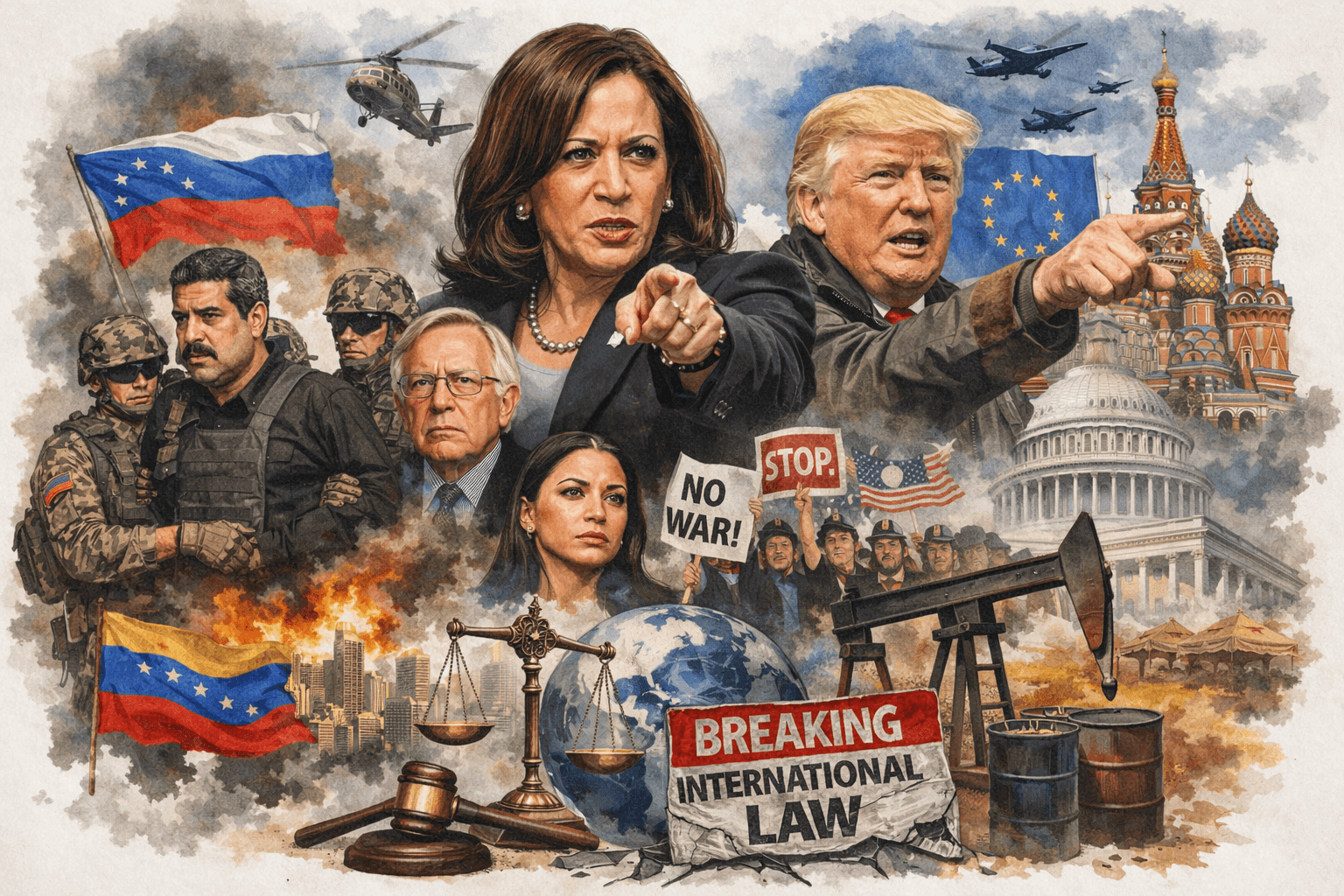
In a move that has sent shockwaves through the international community, the recent U.S. military operation in Venezuela—resulting in the capture of Nicolás Maduro and his wife, Cilia Flores—has triggered a wave of condemnation and legal scrutiny. While the White House frames the mission as a “liberation” and a strike against narco-terrorism, leaders across the globe are sounding alarms over national sovereignty and the bypass of international law.
Global Outcry and Legal Challenges
From South America to Europe and East Asia, the reaction has been swift and largely critical. Major international bodies and several world powers have characterized the operation as a dangerous departure from established diplomatic norms.
International Bodies: High-ranking officials have labeled the action a “dangerous precedent,” expressing deep concern that the rules of international law and established global charters were not respected.
Latin America: Concerns have been raised that the U.S. has “crossed an unacceptable line,” with regional leaders comparing the action to the darkest eras of interventionism in the hemisphere.
Europe: Major European powers have condemned the use of force, emphasizing that no lasting political solution can be imposed from the outside and calling the mission a “blatant violation” of international legality.
Eurasian Powers: Stern rebukes have been issued describing the strikes as “hegemonic acts” and “armed aggression” that threatens regional peace and stability.
Domestic Discord: Prominent U.S. Voices
Within the United States, the military action has deepened the partisan divide. While some allies of the administration praised the “brilliant operation,” several prominent figures and constitutional experts are questioning the lack of Congressional authorization.
Kamala Harris’s Perspective
Kamala Harris released a pointed statement condemning the administration’s strategy. While acknowledging Maduro as a “brutal” and “illegitimate” leader, Harris argued that the unilateral operation was both “unlawful” and “unwise.” > “We’ve seen this movie before,” Harris stated. “Wars for regime change or oil that are sold as strength do not make America safer, stronger, or more affordable.”
She warned that bypassing the War Powers Act undermines the democratic principles the U.S. claims to defend.
Other Key Figures
Congressional Leaders: Several high-ranking members of House committees slammed the move as “illegal and unjustified,” noting that the mission appeared more focused on oil interests than the genuine well-being of the Venezuelan people.
Senate Voices: Senior Senators emphasized that the Constitution requires the administration to seek Congressional approval before committing troops or taking military strikes.
The “MAGA” Conflict: Even within the populist right, some voices have expressed unease, viewing the intervention as a return to the “endless foreign wars” that the administration previously promised to avoid.
The ‘Donroe’ Doctrine?
The President has signaled a revival of the Monroe Doctrine—humorously re-styled by the administration as the “Donroe Doctrine”—asserting that “American dominance in the Western Hemisphere will never be questioned again.”
The administration has confirmed that the U.S. intends to “run the country” until a transition is finalized, with plans for American oil companies to rebuild Venezuela’s infrastructure. This “oil-reimbursement” model has become a central point of contention for those who view the attack as a resource-driven “regime change” rather than a purely humanitarian mission.
