
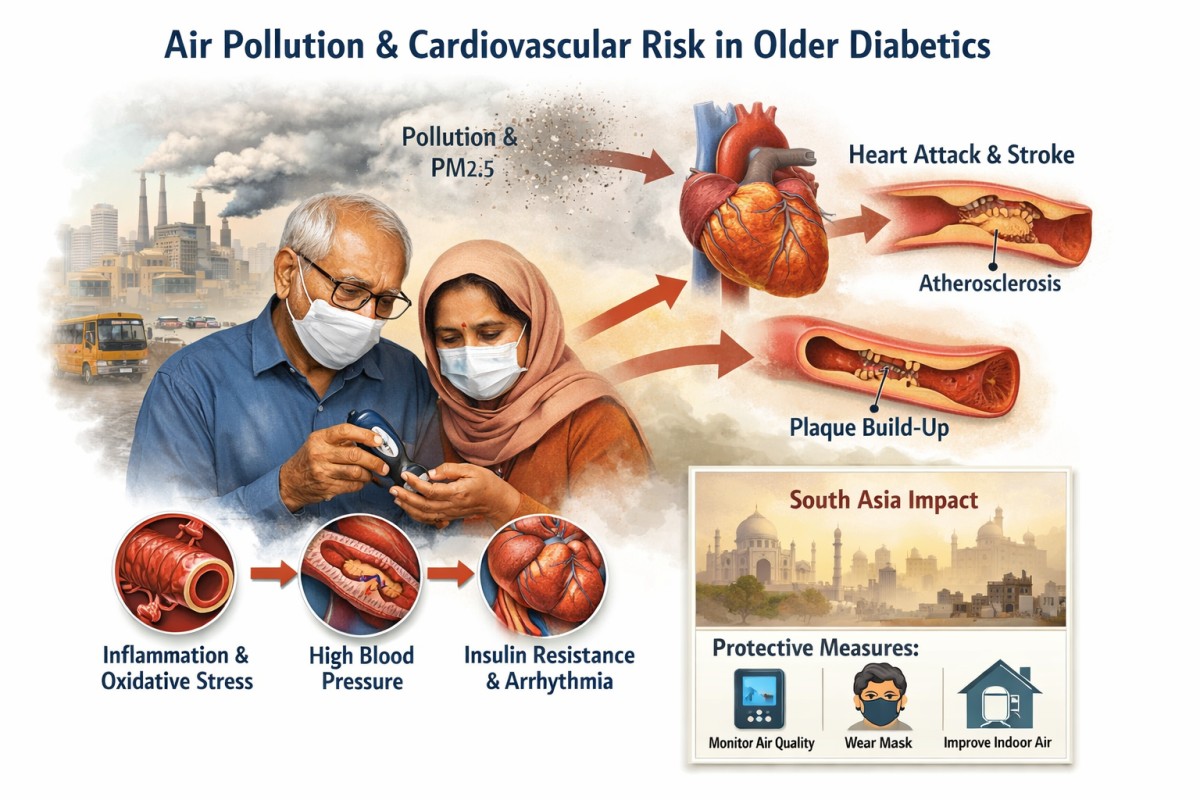
January 14, 2026: Recent scientific investigations are shedding light on a critical public health concern: the heightened vulnerability of older individuals with diabetes to cardiovascular diseases exacerbated by air pollution. A comprehensive study, particularly focusing on populations in South Asia, including India, reveals that prolonged exposure to ambient particulate matter significantly increases the risk of heart-related complications among this demographic. This revelation underscores an urgent need for targeted public health interventions and more stringent environmental policies to protect one of the most susceptible segments of the population.
Understanding the Intersecting Risks
Diabetes, a chronic metabolic disorder characterized by elevated blood glucose levels, already predisposes individuals to a myriad of health complications, including cardiovascular diseases (CVD). The insidious role of air pollution, specifically fine particulate matter (PM2.5), adds another layer of complexity and danger. PM2.5, microscopic particles smaller than 2.5 micrometers in diameter, can penetrate deep into the lungs and even enter the bloodstream, triggering systemic inflammation and oxidative stress throughout the body. For older adults living with diabetes, this environmental assault can have particularly dire consequences.
The latest research indicates a robust correlation between long-term exposure to these pollutants and a higher incidence of heart attacks, strokes, and other severe cardiovascular events in older diabetic patients. Scientists theorize that PM2.5 contributes to insulin resistance, a hallmark of type 2 diabetes, and can impair endothelial function—the health of the inner lining of blood vessels. This impairment accelerates the hardening and narrowing of arteries, a process known as atherosclerosis, which is the primary cause of many cardiovascular diseases. Furthermore, air pollution can directly influence blood pressure regulation and blood clotting mechanisms, further elevating the risk profile for this vulnerable group.
The impact is especially pronounced in regions grappling with high levels of industrial and vehicular emissions. In countries like India and Bangladesh, where air quality often falls below international safety standards, the cumulative effect of pollution on the health of millions of older diabetics represents a looming crisis. Studies from these areas have meticulously tracked cohorts of individuals, observing how incremental increases in PM2.5 concentration correspond with significant rises in cardiovascular morbidity and mortality among those with diabetes, even after accounting for other risk factors.
Biological Mechanisms and Public Health Implications
The biological pathways through which air pollution aggravates cardiovascular disease in diabetics are multifaceted. Beyond systemic inflammation and oxidative stress, PM2.5 exposure has been linked to alterations in the autonomic nervous system, which controls involuntary bodily functions including heart rate and blood pressure. These disturbances can lead to cardiac arrhythmias and an increased workload on the heart. Moreover, exposure to pollutants can modify lipid metabolism and contribute to the formation of plaque in arteries, further accelerating atherosclerotic progression. For someone already struggling with glucose dysregulation, these effects are amplified, creating a synergistic detrimental impact on cardiovascular health.
From a public health standpoint, these findings demand immediate attention. Current strategies for managing diabetes and preventing cardiovascular disease often focus on lifestyle modifications, medication adherence, and regular medical check-ups. While crucial, these efforts may be insufficient in environments where air quality poses a significant, uncontrollable threat. Public health campaigns need to incorporate awareness about air pollution risks, advising older diabetics to monitor air quality forecasts and take protective measures, such as limiting outdoor activities on high-pollution days, wearing masks, and improving indoor air quality.
Crucially, the long-term solution lies in comprehensive environmental policy reforms. Achieving clean air targets, as seen in models from various parts of the world, could substantially reduce the burden of diabetes-related cardiovascular complications. This would involve transitioning to cleaner energy sources, improving public transportation infrastructure, regulating industrial emissions more strictly, and promoting sustainable urban planning. The economic and health benefits of such interventions would extend far beyond the diabetic population, improving overall public health and reducing healthcare expenditures.
Strategic Takeaways:
- Older individuals with diabetes face an increased risk of cardiovascular disease due to air pollution exposure.
- Fine particulate matter (PM2.5) is a primary culprit, contributing to inflammation, oxidative stress, and insulin resistance.
- Regions with high pollution levels, such as parts of South Asia, show a significant correlation between PM2.5 and heart complications in diabetics.
- Air pollution accelerates atherosclerosis, impacts blood pressure, and can alter heart rhythm.
- Protective measures for older diabetics include monitoring air quality, limiting outdoor exposure, and improving indoor air.
- Long-term solutions require robust environmental policies to achieve cleaner air and reduce emissions.
The evidence is clear: air pollution is not merely an environmental nuisance but a profound public health crisis, particularly for vulnerable groups like older diabetics. Addressing this complex challenge requires a concerted effort from individuals, healthcare providers, and policymakers to mitigate exposure and implement transformative environmental changes. Failure to act risks an escalating wave of cardiovascular illness and mortality among those already battling a chronic condition, underscoring the interconnectedness of environmental health and human well-being.
