
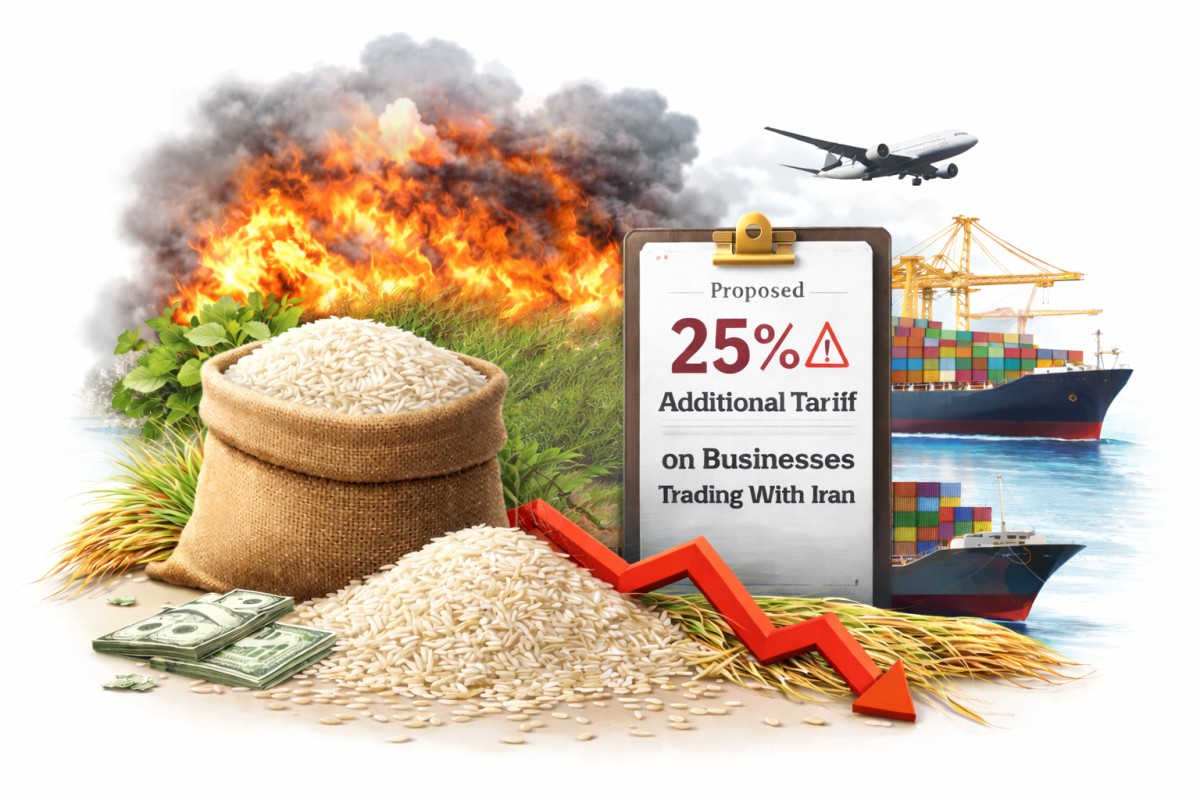
New Delhi, January 13, 2026: Civil unrest in Iran has begun to weigh on India’s basmati rice trade, disrupting exports, delaying payments, and pushing domestic prices lower. Iran has long been a major destination for Indian basmati, but the current instability has introduced fresh uncertainty into order flows, settlement timelines, and shipment planning.
Trade data indicate that India exported basmati rice worth around USD 468 million to Iran during April–November of the 2025–26 financial year, amounting to nearly six lakh tonnes. Exporters say buyer caution and payment delays are now affecting market sentiment, with the impact increasingly visible across domestic mandis.
The uncertainty has been further compounded by recent statements from U.S. President Donald Trump announcing a 25 per cent tariff on countries that continue to trade with Iran. While Indian rice already faces high tariff barriers in the U.S. market, the announcement has triggered risk aversion among global banks, insurers, and shipping operators. Exporters say this has made it more difficult to secure timely payments and arrange vessels willing to call at Iranian ports, adding a layer of secondary pressure on trade flows.
Prices of key basmati varieties have declined over the past week. Basmati 1121 has slipped to about ₹80 per kilogram from ₹85, while varieties 1509 and 1718 have fallen to nearly ₹65 per kilogram from ₹70. The decline reflects delayed contracts, slower shipments, and heightened caution among exporters.
Industry bodies have urged exporters to reassess their exposure to Iran, strengthen payment safeguards, and avoid excessive credit risk. Exporters are also being encouraged to diversify into alternative markets across West Asia, Africa, and Europe to cushion the impact of any prolonged disruption and maintain stability in the basmati trade.
