
New Delhi/Beijing — January 13, 2026
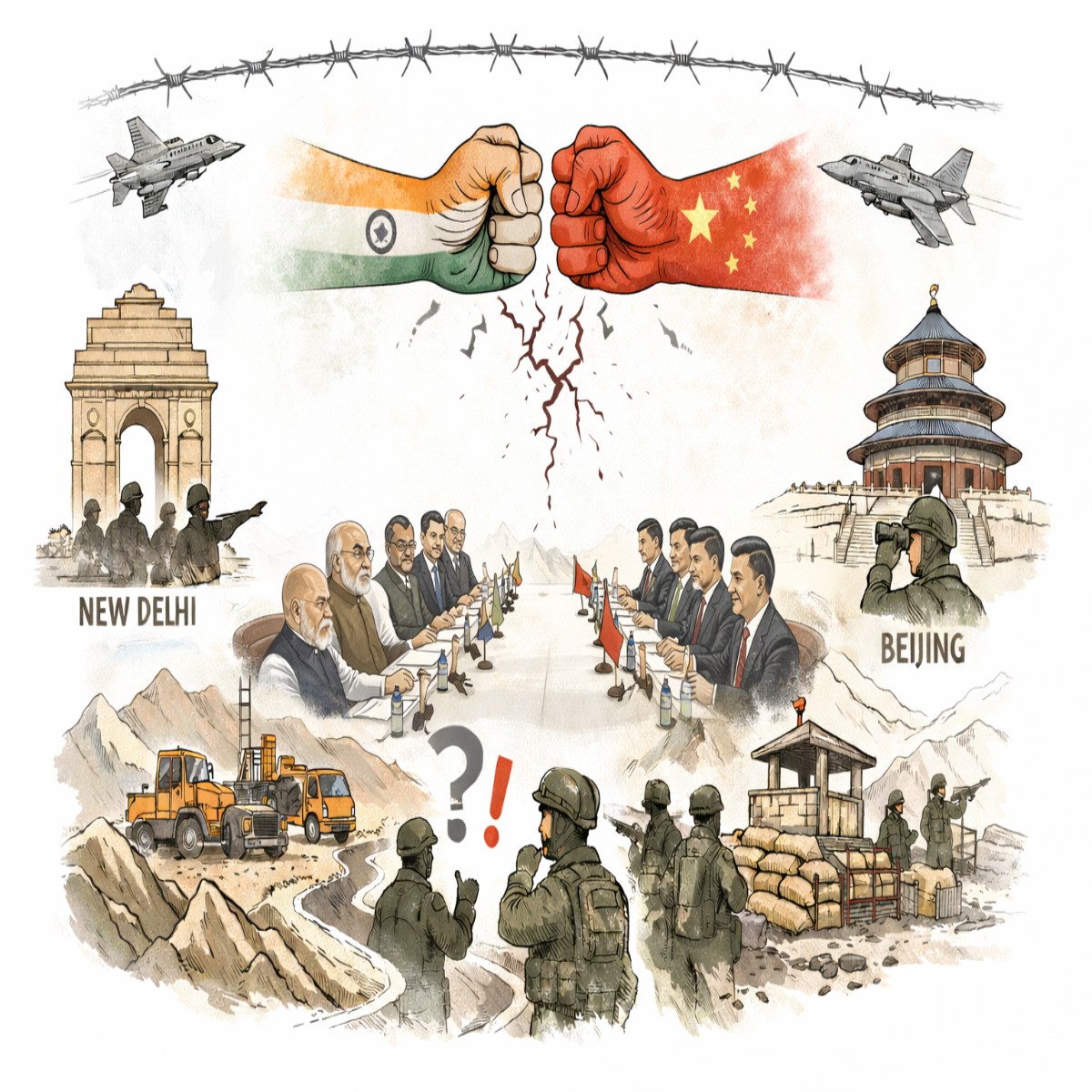
China has once again laid claim to the Shaksgam Valley in Jammu and Kashmir, firmly rejecting India’s objections to infrastructure activities in the area and triggering a renewed diplomatic exchange over sovereignty in the strategically sensitive region.
The claim was articulated on Monday, January 12, 2026, during a regular press briefing in Beijing. Chinese Foreign Ministry spokesperson Mao Ning stated that the Shaksgam Valley belongs to China and argued that Beijing is “fully justified” in carrying out infrastructure activities on what it considers its own territory.
She asserted that China and Pakistan had signed a boundary agreement in the 1960s and claimed the demarcation was an exercise of sovereign rights by two independent states. Beijing also defended the China–Pakistan Economic Corridor (CPEC), portraying it as an economic cooperation initiative. Mao maintained that neither the boundary agreement nor CPEC alters China’s stated position on the broader Kashmir issue.
India issued a firm rebuttal today, following up on initial objections raised on January 9. Ministry of External Affairs (MEA) spokesperson Randhir Jaiswal reiterated that India has never recognized the “so-called” China–Pakistan boundary agreement of 1963 or the legitimacy of CPEC.
Jaiswal emphasized that the Shaksgam Valley is an integral and inalienable part of Indian territory, asserting that any agreement involving Indian land, signed without New Delhi’s consent, is “illegal and invalid.” He further stated that India has consistently protested attempts to alter the ground reality and “reserves the right to take necessary measures to safeguard its interests.”
The Shaksgam Valley, a 5,180 sq km tract located north of the Siachen Glacier and bordering China’s Xinjiang province, has long been a flashpoint. While Beijing cites the 1963 pact with Islamabad to justify its control, India regards the document as void, arguing that Pakistan had no legal authority to cede territory belonging to the erstwhile State of Jammu and Kashmir.
The latest exchange underscores the enduring complexity of territorial disputes in the region and reflects how infrastructure projects continue to be used as tools of strategic posturing among India, China, and Pakistan.
China Reasserts Claim Over Shaksgam Valley, India Rejects Stand as Illegal
China Pakistan boundary agreement 1963, China Shaksgam Valley claim, CPEC controversy India, India China border dispute, India China diplomatic tensions, India China relations January 2026, India rejects China claim, Jammu and Kashmir territorial dispute, MEA response China, Shaksgam Valley sovereignty, South Asia Geopolitics
