
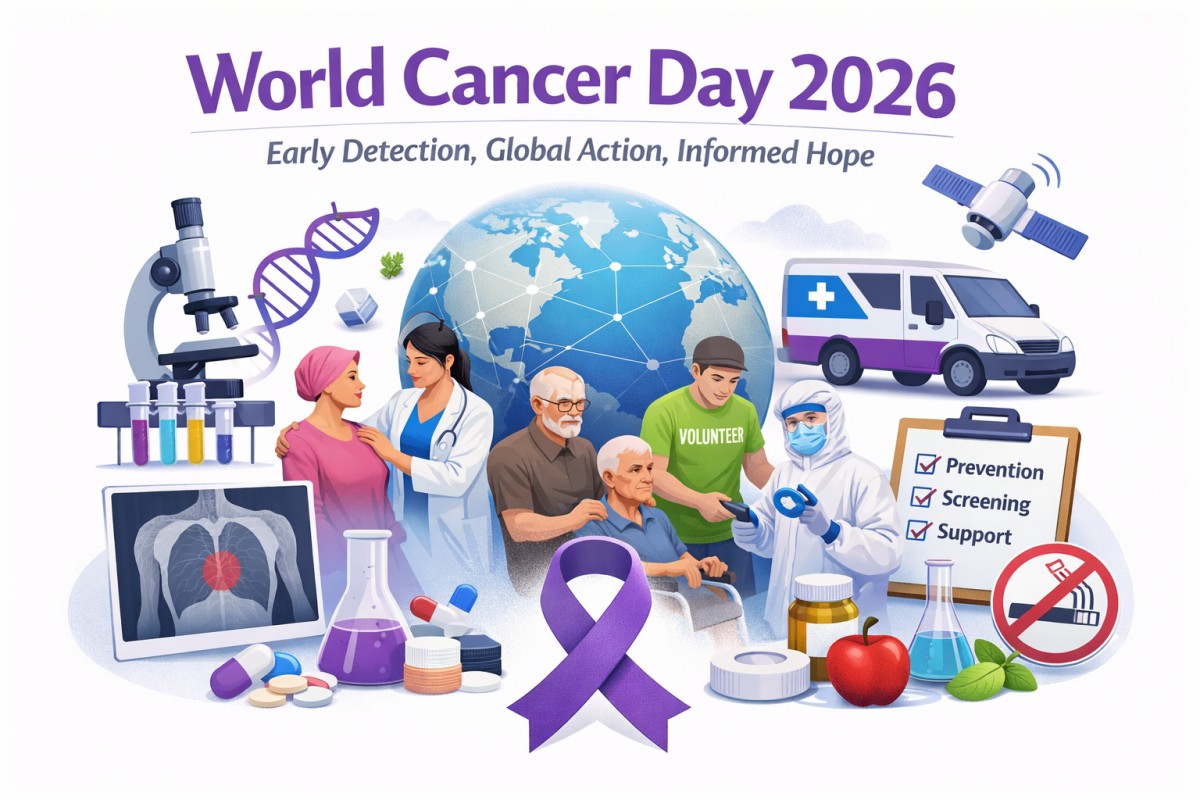
Today, on World Cancer Day, the global community pauses to reflect on one of humanity’s most persistent health challenges — a disease that touches millions of lives each year, across borders, classes, and generations. The day is not merely symbolic. It is a call to move beyond slogans and sympathy toward sustained action, scientific rigor, early detection, and compassionate systems of care.
Cancer is no longer discussed only in terms of survival; it is increasingly discussed in terms of strategy. The global fight has entered a new phase — one defined by personalization, prevention, and public participation.
One of the most encouraging developments is the growing shift toward personalized screening and risk-based assessment. Medical science is steadily moving away from blanket screening models toward more tailored approaches that consider genetics, family history, lifestyle patterns, and environmental exposure. In breast and other cancers, this targeted approach is helping detect disease earlier while reducing unnecessary interventions. Precision is replacing generalization — and patients benefit when medicine becomes more individualized.
Yet even the most advanced screening tools are only effective when people actually use them. Early detection remains one of the strongest defenses against cancer mortality. Regular check-ups, timely diagnostic testing, and attention to warning signs dramatically improve outcomes. Unfortunately, fear, stigma, misinformation, and access barriers still prevent many from seeking help early. Awareness must therefore translate into behavioral change — not just annual campaigns.
Another reality demands attention: healthcare systems everywhere are under strain. Cancer care is resource-intensive, long-term, and emotionally demanding. In many regions, hospitals are overburdened and specialist access is uneven. Here, families, caregivers, and civil society organizations quietly become the backbone of support — arranging transport, funding treatment, providing counseling, and delivering palliative care. Their contribution is rarely highlighted but deeply consequential. Cancer care is not delivered by hospitals alone; it is sustained by communities.
Technology, however, is beginning to rebalance inequity. Telemedicine, mobile diagnostic units, AI-assisted imaging, and cross-border research collaborations are expanding the reach of expertise. Shared global research networks are accelerating drug discovery and treatment protocols. When knowledge travels faster, survival improves wider.
Still, one of the most stubborn obstacles is not biological — it is informational. Myths and misinformation continue to circulate widely: miracle cures, exaggerated risks, and false causes distract patients from evidence-based prevention and treatment. On a day like today, myth-busting is not academic — it is lifesaving. Tobacco avoidance, healthy diet, physical activity, vaccinations where applicable, and regular screenings remain proven protective measures. Science, not rumor, must guide choices.
World Cancer Day should not end as a calendar event. It should function as a civic reminder: policy must prioritize prevention, budgets must support research, systems must widen access, and citizens must engage with credible health information. The fight against cancer is not won by laboratories alone — it is strengthened by informed societies.
Progress is real. Survival rates are improving. Treatments are more targeted. Diagnostics are sharper. Support networks are stronger. But momentum must be protected. Awareness must become investment, and investment must become access.
Cancer is a formidable adversary — but no longer an unknowable one. And that, in itself, is reason to act with both urgency and hope.
