
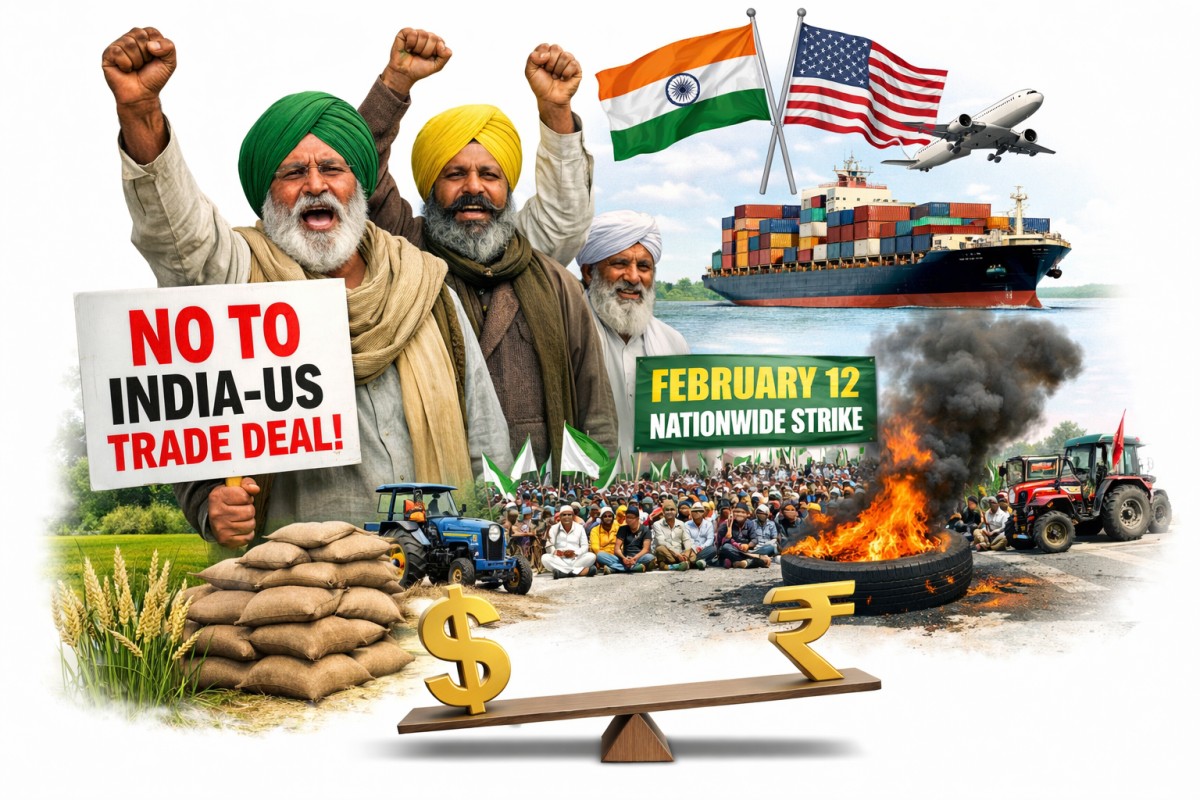
The above image is an illustrative representation, created with AI and does not depict actual individuals or events.
New Delhi, February 8, 2026 — Several national and regional farmers’ organisations have voiced strong opposition to the recently announced India–United States trade framework, warning that its provisions could undermine domestic agriculture and rural livelihoods. Union leaders argue that the deal’s agricultural import clauses may expose Indian producers to unequal competition, and have called for a nationwide strike on February 12 to press for safeguards and transparency.
Farmer representatives said the agreement could facilitate greater entry of foreign agricultural products into Indian markets, potentially weakening price support mechanisms and reducing bargaining power for small and marginal farmers. They cautioned that cheaper or heavily subsidised imports might distort local markets and erode farm incomes at a time when input costs remain high.
Leaders also criticised the government for finalising the framework without adequate consultation. “Agriculture is not merely a trade sector but the livelihood base for millions of families. Any international arrangement affecting it must involve wider stakeholder dialogue,” one union representative stated. The groups have demanded that the government release the full agricultural terms of the pact and initiate structured consultations with farmer organisations and state governments.
Plans for the February 12 strike include coordinated protests, road blockades in selected districts, and peaceful demonstrations outside administrative offices. Organisers emphasised that essential services would not be disrupted, but warned of large mobilisations across several agrarian states.
Government officials, meanwhile, maintain that trade partnerships are designed to expand export opportunities and strengthen supply chains. Policy representatives have indicated that protective measures and phased implementation clauses are built into negotiations, though detailed responses to the latest farmer objections are awaited.
Agricultural economists remain divided on the likely impact. Some argue that expanded trade access could benefit export-oriented producers and agri-processing industries, while others caution that without robust domestic support systems, smaller farmers may struggle to compete with large international suppliers.
With the strike call gaining traction across multiple unions, the coming days are expected to see intensified dialogue and protest preparations, once again placing the spotlight on the balance between trade policy and farm sector security.
