
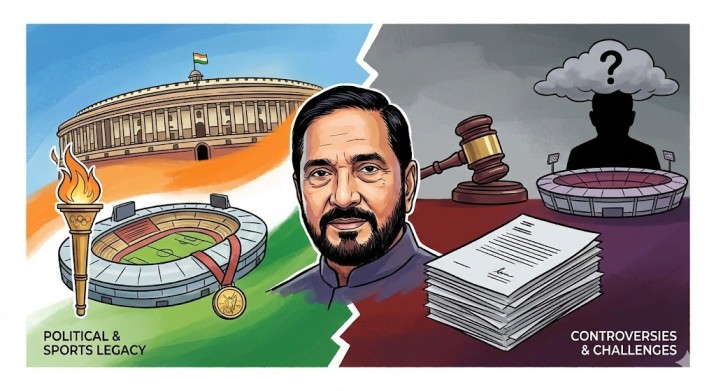
Veteran politician Suresh Kalmadi, who served as a Union Minister and long‑time Congress leader, died on Tuesday at the age of 81. His death marks the end of a contentious but influential career that spanned municipal governance, national politics, and high‑profile scandals.
Career Highlights and Public Service
Kalmadi entered public life in the 1970s, rising through the ranks of the Indian National Congress. He held the post of Minister of State for Information and Broadcasting in the early 1990s, later becoming a senior figure in the party’s Maharashtra unit. In 2009, he was appointed Union Minister of State for Railways, a brief tenure that underscored his standing within the central government.
Beyond his ministerial roles, Kalmadi is perhaps best known for his leadership of the Organising Committee for the 2010 Commonwealth Games in Delhi. The event, intended to showcase India’s growing global stature, became embroiled in allegations of financial irregularities, contract violations, and administrative mismanagement.
Legal Troubles and Controversies
The Commonwealth Games scandal dominated Kalmadi’s later years. In 2011, he was arrested on charges of corruption, money laundering, and criminal conspiracy related to the Games’ budget overruns. Although he spent several months in custody, he was later granted bail and continued to contest the allegations in court.
In 2016, a special CBI court acquitted Kalmadi of most charges, citing insufficient evidence. Nevertheless, the episode left an indelible mark on his public image, prompting debates about accountability and governance in large‑scale sporting events.
Impact on Indian Politics and Public Perception
Kalmadi’s death has prompted reflections on his complex legacy. Supporters credit him with championing infrastructure projects in Maharashtra, advocating for urban development, and playing a pivotal role in the Congress party’s regional strategies. Critics, however, point to the Commonwealth Games debacle as a cautionary tale of unchecked authority and fiscal mismanagement.
Political analysts note that Kalmadi’s career illustrates the broader challenges facing Indian politics: balancing development ambitions with transparency, and navigating the fine line between political patronage and public service.
- Born on 13 November 1944, Kalmadi entered politics through the Congress youth wing.
- Served as Minister of State for Information and Broadcasting (1991‑1993) and later for Railways (2009‑2010).
- Led Delhi’s 2010 Commonwealth Games Organising Committee, a role that ended in legal scrutiny.
- Arrested in 2011 on corruption charges; later granted bail and eventually acquitted in 2016.
- Remembered for both his contributions to urban development and the controversies that shadowed his later career.
As India’s political landscape continues to evolve, the passing of Suresh Kalmadi serves as a reminder of the enduring influence of senior leaders and the importance of accountability in public office. His death will be noted in parliamentary tributes, and his family has requested privacy during this period of mourning.
