
The Land They Cannot Carry: A Nation Robbed of Trust by Its Own Custodians
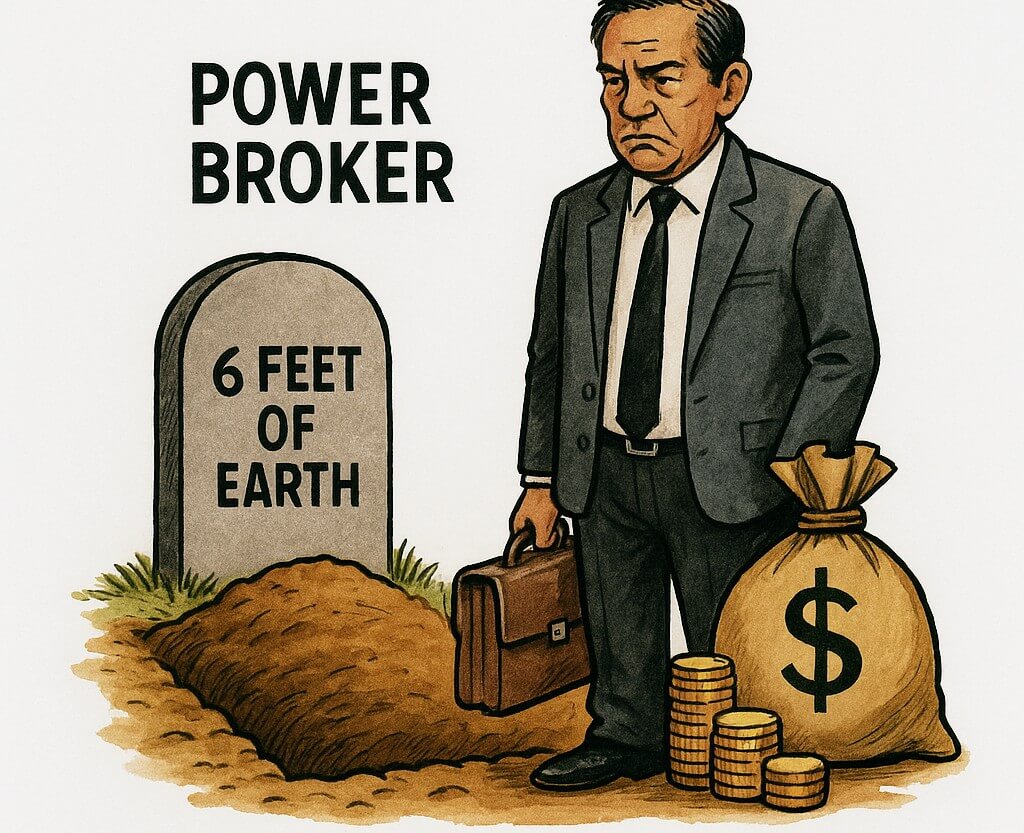
Leo Tolstoy’s timeless parable, “How Much Land Does a Man Need?” is a chilling indictment of human avarice. It tells the stark story of Pahom, a peasant who spent his entire life relentlessly pursuing more land, only to collapse from sheer exhaustion on the very day he finally secured his ultimate tract. In his final, fatal moment, the universal truth was laid bare: all he ever truly needed was the six feet of earth necessary for his grave. This tale isn’t just a mirror for the individual; it perfectly reflects the systemic, insatiable greed that now grips the very people and institutions entrusted with public trust in modern India.
The political arena is arguably the most visible stage for this corrosive greed. Instead of pursuing genuine, long-term national development, politicians chase votes and coffers with manic energy. Their actions are not rooted in a commitment to service but are often calculated steps toward consolidating perpetual power. Schemes are announced with immaculate timing to coincide with elections, funds are transferred into voter accounts, and taxpayer money is lavishly spent on self-aggrandizing rallies, massive advertisements, and grand, premature inaugurations. Their hunger is not for the integrity of history but for the immediacy of power. They forget that the lasting judgment will not be based on the temporary giveaways but on the honesty and accountability they consistently denied the nation. The political legacy they build is one of ephemeral gain and permanent institutional decay.
The rot extends deep into the machinery of the state, where custodians of justice and fairness often become gatekeepers of privilege. This is the tragic exhaustion of trust in the bedrock of governance. Corrupt bureaucrats and police officers routinely bend rules—not for the public good, but for personal bribes or political favour. The law, meant to be a blind, impartial force, becomes a weapon wielded by those with influence. Judicial officers, the ultimate arbiters of right and wrong, delay verdicts and adjourn cases until justice itself doesn’t just become a complete casualty. Civil servants, meant to be the spine of administration, sometimes betray their oath to become complicit enforcers of the status quo. Each act of corruption—each delayed file, each overlooked crime—is another ‘acre’ of illegitimate land claimed, paving a path toward a public inheritance of only mistrust.
This corruption isn’t just financial. It breeds social systems that exploit the vulnerable. Consider the silent, deadly acreage claimed by domestic violence and the insidious practice of dowry. These are not mere social evils; they are crimes enabled by a system that is too slow, too compromised, or too indifferent to protect the basic human dignity of women. The bribe-taking police officer, the delaying magistrate, and the unconcerned politician all share in the blame for this deep-seated social wound, demonstrating how systemic avarice allows cruelty to flourish unchallenged.
The market of greed has also captured the very institutions meant to uplift and heal the nation. Coaching centres ruthlessly exploit the anxieties of aspiring students, charging exorbitant fees while reducing the noble pursuit of education to a mere transaction—a high-stakes gamble where integrity is optional. Teachers, who should inspire, instead demand favours or neglect their fundamental duty. Doctors can be found prescribing unnecessary and expensive treatments purely for profit, turning the sacred oath of healing into a commercial venture.
Engineers cut critical corners in construction, leading to the risk of collapsing bridges and structurally weak infrastructure. Private organisations often exploit employees with gruelling long hours and minimal dignity, hoarding the profit from labour while sowing seeds of disillusionment. The inefficiency of state departments, like transport boards bleeding from mismanagement and electricity boards suffering from staggering inefficiency, means the common citizen pays the steep price—in delayed buses, inflated bills, and overcrowded, under-equipped public hospitals.
Yet, the chilling paradox of Tolstoy’s peasant remains the ultimate truth for all of India’s power brokers. None of these actors—the politician, the profiteer, the corrupt bureaucrat—will carry their ill-gotten gains beyond the grave. Six feet of earth awaits them all. The land they hoard, the money they stash, the influence they desperately cling to, will all dissolve upon their final breath. The only thing that remains is the indelible legacy they leave behind: a trail of broken promises, a history of hollow governance, and a society irrevocably robbed of its fundamental trust.
The lesson is stark, simple, and inescapable: greed is not merely a personal failing, but a corrosive systemic disease. When the nation’s leaders, administrators, and professionals chase endless acres of transient wealth and influence, they wilfully forget the finite, unchangeable truth of human existence. What India needs now is not more schemes, or more catchy slogans. It needs a massive infusion of honesty, profound accountability, and a commitment to selfless service that is designed to outlive the individual. Tolstoy’s peasant died chasing land. India’s power brokers risk dying chasing money and influence. And while six feet of earth will ultimately suffice for their rest, the nation will be left with scars far deeper than any grave.
